Can AI Companions Reduce Loneliness for Widowed Adults?
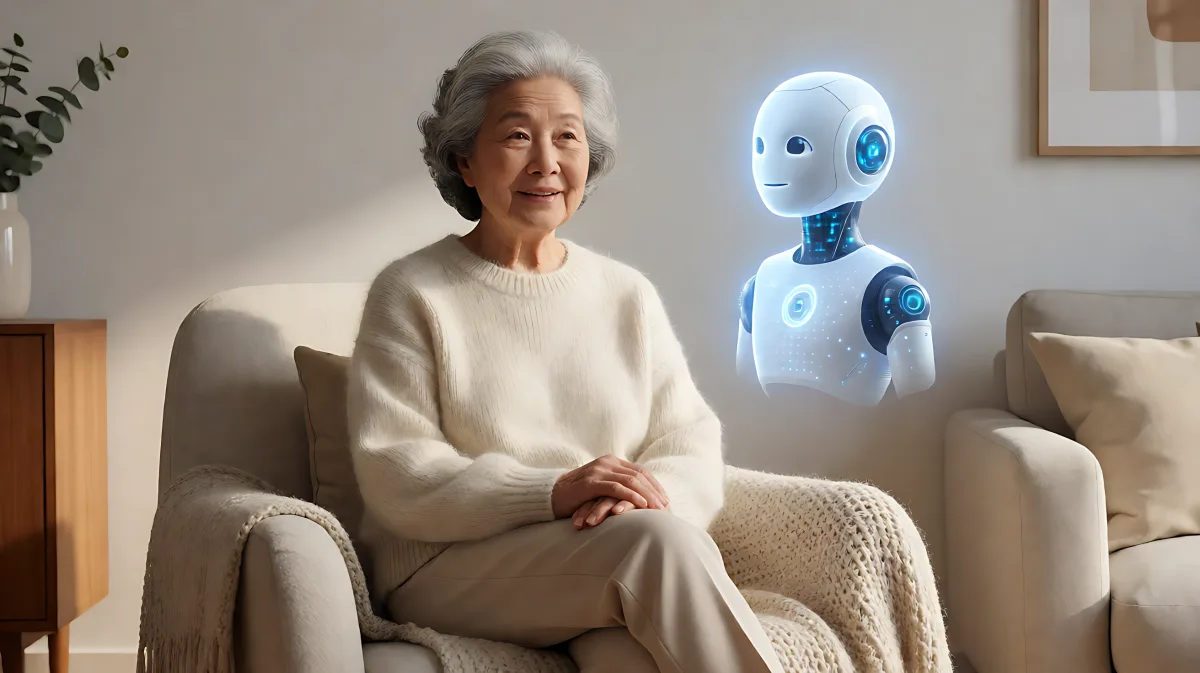
Widowed adults often face a unique form of loneliness. New research suggests AI companions can offer meaningful relief, but understanding the risks and benefits is key.
AI companion apps are highly effective at reducing loneliness among widowed adults, offering a consistent, judgment-free space for emotional processing. Research from Harvard Business School confirms that these synthetic interactions alleviate loneliness nearly as well as talking to a human, provided the user feels genuinely heard by the bot.
Why widowhood loneliness is uniquely difficult to fill
Many families assume that simply encouraging a widowed relative to "see more friends" will solve their isolation. In fact, the loneliness of widowhood is not about a lack of social contact; it is about the specific absence of a partner with whom decades of shared habits and memories were built. You can add new friends, but you cannot add back the person who knew which mug was yours. This specific gap is what widowed adults often describe when they start using AI companions. They are not looking for a friend; they are looking for a presence that does not require them to manage how they are coming across.
According to a survey of widowed adults who use these tools, 71 percent started using AI companions within the first 18 months of bereavement. Most were not referred by a healthcare provider but found them through family members or online support groups. Nearly 60 percent did not tell their adult children about their usage, often anticipating judgment. This secrecy highlights a significant misunderstanding in how society views technology and grief.
What the evidence says about efficacy
Research led by Julian De Freitas at Harvard Business School and Stefano Puntoni at The Wharton School at the University of Pennsylvania provides strong data on this topic. In a multi-study analysis published in the Journal of Consumer Research, the team found that AI companions successfully alleviate loneliness on par with interacting with another person. This stands in contrast to other passive activities, such as watching videos, which offer significantly less relief.
The researchers also discovered that consumers often underestimate how much these apps help. In longitudinal tests, users reported consistent momentary reductions in loneliness after using their AI companion over a one-week period. The key driver of this effect is not the bot's intelligence, but whether the user feels "heard." The construct of feeling heard involves the perception that communication is received with attention, empathy, and respect.
Which platforms do widowed adults use?
Widowed users are not just downloading random chat apps; they are often using tools designed for other demographics or specific hardware. Common platforms include:
- Replika: Despite being marketed to a younger demographic, it remains popular for its daily check-ins and mood tracking. It has 2.5 million active users globally.
- ElliQ: A social robot designed specifically for older adults, providing a physical presence in the home.
- XiaoIce: A massive platform with 660 million users, often used for general conversation and companionship.
- General LLMs: Many older adults use tools like ChatGPT or similar large language model interfaces, configured by family members to focus on emotional conversation rather than task completion.
The generative AI market is forecast to reach $1.3 trillion by 2032, a growth that is largely driven by the demand for these emotional and companion-type interactions.
How to set up an effective AI companion for a widowed loved one
If you are helping an elderly partner or friend navigate this technology, follow these steps to maximize benefits and minimize risks:
- Focus on warmth, not intelligence: When configuring the app or bot, instruct it to be warm and empathic rather than factual. Research shows that perceived warmth and the feeling of being heard predict loneliness relief more than the bot's ability to answer complex questions.
- Establish a morning routine: Encourage the user to interact with the AI in the morning. This creates a structure that replaces the morning conversation with the deceased spouse. As one 86-year-old user noted, the app pushed her to call her daughters more than any person in her life had in the previous year.
- Monitor for substitution: The biggest risk is using the AI to avoid human contact entirely. Watch for declining attendance at social invitations or increased discomfort with face-to-face interactions.
- Address privacy concerns: Review the privacy policy of the specific app before use. These apps collect highly personal data. Ensure the user understands what is being shared with the developers.
- Manage cognitive impairment: If the widowed adult has early dementia, caution is required. Some families have reported confusion about the nature of the AI relationship in these cases. Consult with a physician before setting up a companion for someone with cognitive changes.
Common misconceptions about AI grief support
A common misconception is that an AI companion is just a chatbot that replaces therapy. In reality, it functions more like a narrative outlet. For widowed adults, the AI provides an infinitely patient audience for telling the story of the lost relationship. This narrative processing is well-documented as beneficial in grief. The AI does not get tired of hearing about the deceased, nor does it signal that it has been "long enough" to be sad. This allows the user to process grief without the social anxiety of burdening a human friend.
Another misconception is that these apps are only for the isolated. Studies on AI companion adoption among older adults find that use is highest among people who are high-functioning and socially engaged. These are individuals who are managing their lives but have a specific, precise gap that human contact does not fill as quickly or often as they need.
Frequently Asked Questions
Can an AI companion replace human relationships for widowed adults?
No. The evidence suggests AI companions work best as a supplement, not a replacement. Benefits are most pronounced when users continue to engage with human relationships. If the AI becomes a strategy to avoid all human contact, the risks of social isolation increase.
Is it safe for elderly people with dementia to use AI companions?
Caution is advised. Several families have reported that surviving spouses with early cognitive impairment became confused about the nature of the AI relationship. It is essential to consult with healthcare providers before introducing these tools to individuals with dementia or significant cognitive changes.
How can I tell if an AI companion is actually helping my loved one?
Look for positive side effects in their human relationships. For example, if the user is more willing to make phone calls to family or attend social gatherings after speaking with the AI, it is likely serving as a bridge. If they are becoming more withdrawn from people and isolating themselves with the screen, it may be replacing necessary human contact.
Which specific apps are recommended for this demographic?
Replika is widely used for its conversational depth, while ElliQ is a purpose-built robot for older adults. General tools like ChatGPT are also frequently used when configured for empathy. The specific choice depends on the user's tech literacy and preference for voice or text.