Healthspan vs. Lifespan: How to Extend Healthy Years
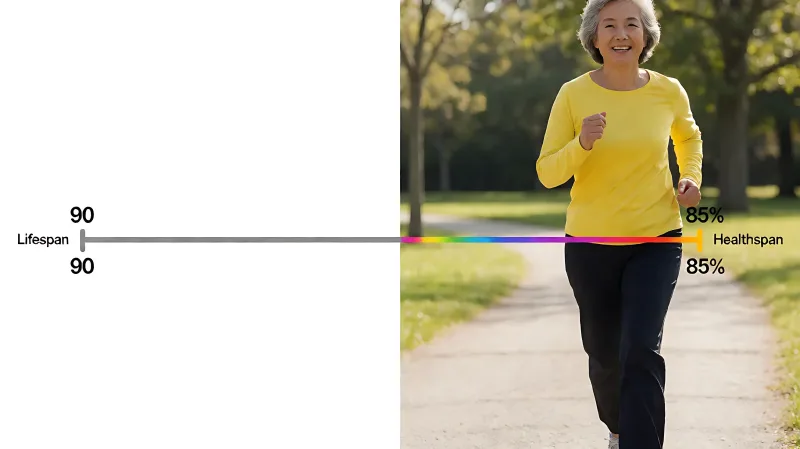
Lifespan measures total years lived, while healthspan counts the years spent in good health. Discover how everyday habits can narrow the gap and preserve independence.
Lifespan measures total years lived, while healthspan counts years spent in good health without disability. To extend your healthy years, prioritize strength training, quality sleep, and chronic disease prevention. These strategies help close the gap between aging and dying, ensuring independence for longer.
For more information, see NIA healthy aging resources from the National Institute on Aging.
For decades, the primary metric for success in medicine was how long a person lived. Today, the focus has shifted to how well a person lives. This distinction is the difference between lifespan and healthspan. As the average human lifespan increases globally, many people are spending a significant portion of their later years managing chronic conditions. Understanding this gap is the first step toward a more active, independent, and comfortable retirement.
What Is the Difference Between Lifespan and Healthspan?
Lifespan is the total number of years between your birth and your death. It is a static number that ends only at death. Healthspan, however, is the duration of life spent in good health, free from chronic disease, pain, and disability. It is the period when you can still perform daily activities, manage your finances, and participate in social and physical hobbies without significant limitation.
In the United States, life expectancy has risen dramatically over the last century. In 1900, a newborn’s expected life was roughly 47 years. Today, that figure is closer to 79 years, driven by advances in sanitation, antibiotics, and vaccines. However, healthspan has not grown at the same rate. Many Americans now live a decade or more dealing with comorbidities such as heart disease, type 2 diabetes, arthritis, and cognitive decline.
| Metric | Definition | Primary Goal |
|---|---|---|
| Lifespan | Total years lived | Maximum longevity |
| Healthspan | Years lived in good health | Quality of life and independence |
Why Is the Healthspan Gap Widening?
According to the American Heart Association, healthspan in the United States has declined in recent decades even as overall longevity improves. A significant portion of the population is living with multiple chronic conditions simultaneously. Data from the American Heart Association indicates that nearly 80% of adults aged 60 and older live with two or more chronic conditions.
This growing gap creates a phase of life that is often characterized by loss of autonomy and increased healthcare costs. The global average gap between lifespan and healthspan is estimated at 9.6 years, according to data published in the JAMA Network. This means that, on average, people may spend nearly a decade in a state of reduced health before the end of their lives. Extending healthspan is crucial for delaying the onset of disability and maintaining a sense of purpose and control.
How Do You Measure Your Healthy Life Expectancy?
Measuring healthspan is more complex than counting birthdays. It often involves assessing functional independence. Researchers and clinicians use various indicators to determine when the "healthy" portion of life ends.
- Physical Mobility: The ability to walk a quarter mile (approximately 400 meters) without stopping due to fatigue or breathlessness.
- Activities of Daily Living: The capacity to bathe, dress, and manage personal hygiene without assistance.
- Cognitive Function: The ability to manage finances, medications, and complex decision-making without confusion or memory loss.
- Chronic Disease Management: The frequency of hospitalizations or reliance on multiple medications to control conditions like hypertension or diabetes.
The World Health Organization suggests that the average healthspan globally is around 63 to 64 years. This means that for many, the final 15 to 20 years of a 79-year lifespan are spent in a state of chronic illness. Closing this gap is a key objective of modern preventive medicine.
What Lifestyle Habits Extend Healthspan?
While genetics may influence the total lifespan by 10% to 30%, lifestyle factors have a profound impact on healthspan. You have significant control over the biological processes known as the "hallmarks of aging," such as chronic inflammation, mitochondrial dysfunction, and cellular repair mechanisms.
Dr. Crystal Lee, a medical director at Blue Cross Blue Shield of Michigan, highlights five pillars for extending healthy years. These strategies are supported by extensive research and are currently recommended by major health organizations.
How Much Exercise Do You Need?
The Centers for Disease Control and Prevention (CDC) recommends at least 150 minutes of moderate-intensity aerobic activity per week. To maintain healthspan specifically, adding two sessions of muscle-strengthening activities is critical. As we age, sarcopenia (the natural loss of muscle mass) accelerates. Strength training combats this, preserving balance and reducing the risk of falls, which are a leading cause of disability in older adults.
Does Nutrition Impact Aging?
A nutrient-dense diet rich in vegetables, fruits, whole grains, and lean proteins helps manage blood sugar and cholesterol levels. Excess calories and highly processed foods are linked to chronic inflammation, which drives many age-related diseases. Reducing sugar and saturated fats while maintaining a healthy weight directly supports cardiovascular and metabolic health, key components of a long healthspan.
Why Is Sleep and Stress Management Critical?
Chronic sleep deprivation and unmanaged stress lead to higher cortisol levels, which can damage brain cells and increase the risk of heart disease. Prioritizing 7 to 9 hours of quality sleep per night allows the body to perform repair functions. Additionally, maintaining strong social connections has been shown to improve cognitive function and reduce mortality risk, acting as a buffer against the isolation that often accompanies aging.
What Role Does Preventive Care Play?
Regular checkups are essential for establishing a baseline of health and detecting issues early. The Consumer Product Safety Commission (CPSC) also advises on home safety modifications, such as removing tripping hazards, to support independence. Medical prevention involves routine screenings for blood pressure, cholesterol, and cancer. Early detection of conditions like hypertension or type 2 diabetes allows for lifestyle interventions that can prevent progression to more severe, disabling states.
It is not about living to 100 at any cost; it is about reducing the burden of chronic disease so that your final years are as active and joyful as your middle years. By focusing on healthspan, you shift the goal from mere survival to thriving.
Frequently Asked Questions
Can you extend healthspan without living longer?
Yes, it is possible to extend healthspan even if total lifespan remains stable. By managing chronic conditions and maintaining physical and cognitive function, you can reduce the number of years spent in disability. This means you may live to the same age but spend significantly more of that time feeling well and independent.
What is the average gap between lifespan and healthspan?
According to the JAMA Network, the global average gap is approximately 9.6 years. In the United States, this gap may be wider due to the prevalence of obesity and chronic heart disease, meaning many Americans spend a larger portion of their later years in a state of reduced health.
Is healthspan purely genetic?
No, genetics only account for 10% to 30% of the variation in lifespan and healthspan. The majority of the risk for age-related diseases is influenced by modifiable lifestyle factors, including diet, physical activity, smoking status, and social engagement. This is why behavioral changes can have such a dramatic impact on your quality of life in older age.
At what age should I start focusing on healthspan?
It is never too early. The foundations for healthy aging are laid in your 20s and 30s through exercise and nutrition. However, intervention in your 50s and 60s is particularly effective for preventing the onset of chronic disability. Starting strength training and metabolic health checks in your 50s can significantly delay the start of the "healthspan gap."