Chair Exercises for Seniors: Boost Balance and Strength After 70
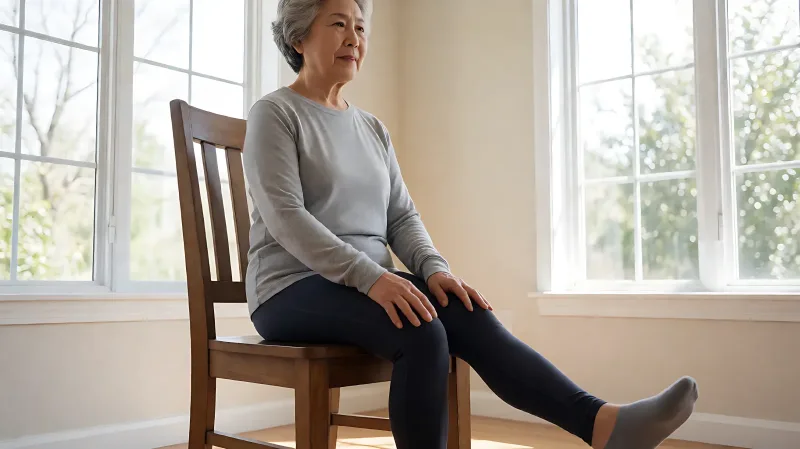
Walking alone may not be enough to prevent falls or maintain independence after 70. These evidence-backed chair exercises target the specific muscle groups needed for stability and strength.
For adults over 70, maintaining independence relies on more than just staying active; it requires targeted strength and balance training. Seated chair exercises are an effective way to build the leg power and stability needed for safe walking. By focusing on specific movements that mimic daily tasks, older adults can reduce fall risks and retain the ability to manage everyday activities without assistance.
Why Are Chair Exercises Important for Adults Over 70?
As we age, the body naturally loses muscle mass, a process known as sarcopenia. Research indicates that adults lose approximately 3 percent of their muscle strength each year. While walking is a beneficial form of cardiovascular exercise, it is a straight-line movement that does not sufficiently challenge the muscles needed for side-to-side stability or the reactive strength required to catch yourself after a trip. A large study involving over 1,200 seniors found that those who added chair-based strength movements to their routine reduced their fall risk by up to 73 percent compared to those who only walked. This suggests that to keep your balance and walking strength sharp after 70, you must move beyond simple cardio and incorporate resistance and coordination work.
How Do You Set Up a Safe Space for Seated Workouts?
Safety is paramount when performing exercises while seated. Choose a sturdy chair with a firm bottom and a backrest. Avoid using chairs with wheels, armrests, or soft cushioning that sinks, as these can compromise stability. Placing the chair against a wall can prevent it from sliding during standing movements. You do not need expensive equipment; your body weight is often enough, though light hand weights can be added later for progression. Ensure you have enough room around the chair to lift your legs and arms without hitting furniture. If you experience pain or dizziness, stop immediately and consult a healthcare provider before continuing.
What Is the Best Routine for Improving Walking Strength?
To improve the ability to walk confidently, you need to strengthen the quadriceps, glutes, and core. The sit-to-stand exercise is the gold standard for this. It mimics the act of rising from a bed or car, which is fundamental to independent living. Studies show that seniors who struggle to stand up from a chair are up to four times more likely to need help with daily tasks within two years. To perform this movement effectively, sit at the front edge of the chair with feet flat on the floor and hip-width apart. Cross your arms over your chest to discourage using your hands for support. Lean forward slightly from the hips, keep your chest lifted, and push through your heels to stand. Lower yourself back down with control. Start with five repetitions and build toward ten. The goal is to engage the leg muscles rather than the arms.
How Can You Train Ankle Stability to Prevent Falls?
Approximately 80 percent of falls occur due to weak ankles and calves. The ankle is the first point of contact when you trip, so its strength is critical for balance. Seated heel raises are a simple but powerful way to target these muscles. Sit tall with your feet flat on the floor. Slowly lift your heels off the ground, rising onto the balls of your feet. Hold this position for two seconds, then lower your heels slowly. Perform 15 repetitions, three times a week. Once this becomes easy, you can progress by performing the movement while standing and holding the back of the chair for balance. A recent study noted that regular practice of this movement reduced fall risk by 68 percent within six months for older participants.
What Role Does Cross-Body Coordination Play in Balance?
Balance is not just about strength; it is also about the brain’s ability to coordinate movement. Seated marches with opposite arm lifts train cross-body coordination. Sit tall with feet flat. Lift your right knee while raising your left arm, then switch sides. Move slowly and deliberately. This movement challenges the vestibular system and improves reaction time. Research from Harvard Medical School found that cross-body exercises improved balance metrics by 47 percent more than walking alone. It takes about ten minutes to complete a routine including these moves, making it an easy habit to build into your morning.
How Often Should You Perform These Exercises?
Consistency is key to seeing results. Physical therapists often recommend starting with one set of ten repetitions for each exercise and gradually working up to two or three sets. You do not need to exercise every day; three days a week is sufficient for strength building, though daily balance work can be beneficial. If you are just starting out, listen to your body. If an exercise feels painful or unstable, modify it by using the chair armrests for support. Over time, you can remove these supports and add light weights to increase difficulty.
What is the single most effective chair exercise for preventing falls?
The sit-to-stand exercise is widely considered the most functional movement for independence. It strengthens the entire lower body chain, including the quadriceps, hamstrings, and glutes, which are essential for walking and maintaining posture. Improving your ability to stand up from a chair directly correlates with a lower risk of falls and greater confidence in navigating daily environments.
Do I need to use weights for chair exercises to get results?
No, weights are not necessary to start. Bodyweight exercises like heel raises and chair stands are highly effective for building foundational strength. You can use resistance bands or light dumbbells once you become stronger, but many seniors find that the simple act of controlling the lowering phase of a movement is enough to build significant muscle endurance and stability over time.
Can these exercises help with knee pain?
Chair exercises can be a gentle way to strengthen the muscles around the knee without placing excessive impact on the joint. Strengthening the quadriceps and hamstrings helps support the knee and can reduce pain associated with osteoarthritis. However, if you have acute knee pain or a recent injury, it is important to consult a doctor or physical therapist to ensure the exercises are appropriate for your specific condition.
How long will it take to notice improved balance?
Most people begin to notice increased confidence and steadier footing within two weeks of a consistent routine. Significant improvements in strength and reaction time, such as being able to hold a single-leg stand test for 30 seconds, typically develop over several months. Regularly testing your balance by standing behind a chair and holding one foot off the floor can help you track your progress.