Best Smart Night Light Modes for 2026: Safety & Sleep
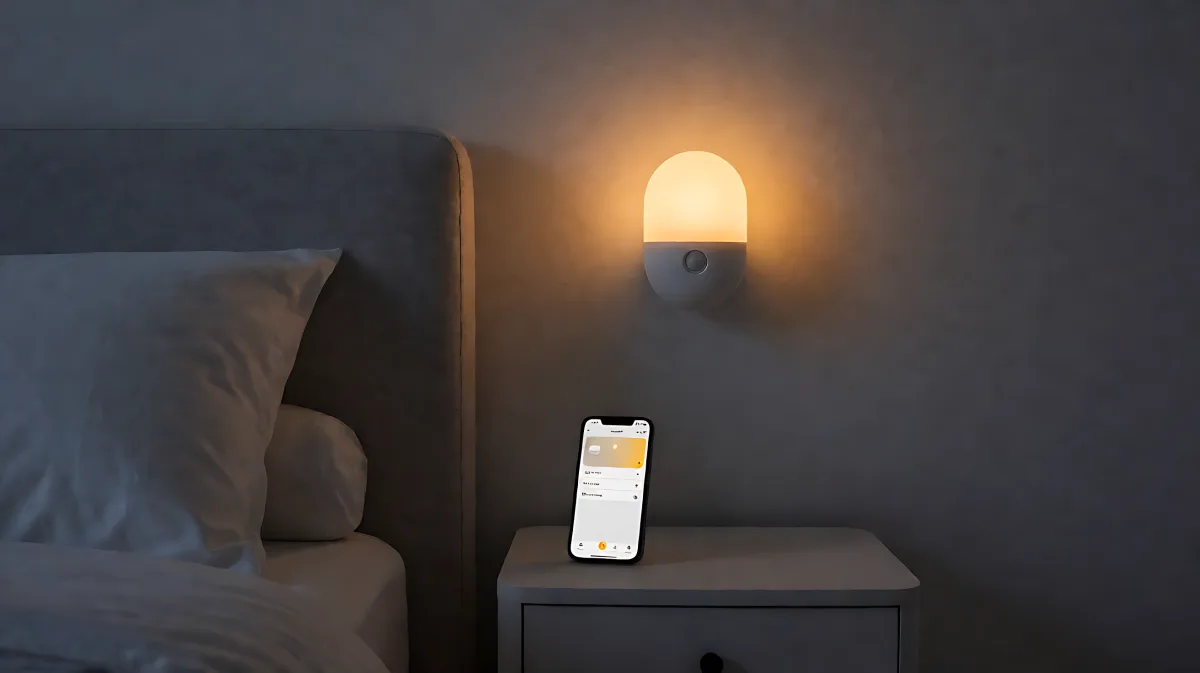
Transform your home's nighttime environment with smart automation. Learn how motion sensors, low-light settings, and voice-controlled schedules create a safer, more restful living space without manual switching.
Smart home night mode automates lighting to ensure safety and comfort after dark. By using motion sensors, light detectors, and voice assistants, these systems turn on low-intensity lights only when necessary. This hands-free approach reduces the risk of tripping in the dark and supports better sleep hygiene by minimizing bright light exposure during rest.
Why automate your nighttime lighting?
Traditional light switches require physical interaction, which can be inconvenient or disruptive at night. Automated systems remove this friction. According to product data from 2026, devices like the AUVON night light activate when motion is detected within a 3 to 5-meter range. They then automatically extinguish after 60 seconds of inactivity, ensuring you do not waste energy or sleep poorly due to lingering light. This precision helps maintain circadian rhythm, which is essential for healthy sleep cycles.
For households with elderly members, automated path lighting is a critical safety feature. Reports from the AssistIndependence team in 2026 highlight that motion-activated systems in hallways and bathrooms significantly reduce fall risks. By lighting paths only when movement occurs, residents can navigate their homes safely without needing to fumble for switches in the dark. This specific functionality is a top priority for caregivers seeking reliable, hands-free solutions.
How do motion sensors and light detectors work together?
Most advanced night lights use a dual-sensor system. A PIR motion sensor detects movement, while a lux sensor measures ambient light. The system only activates the LED if the room is dark and someone is present. The Govee RGBIC lamp, for example, offers app-controlled dimming that can be set to specific low lumens for nighttime use. This prevents the light from being too bright, which is often a concern with standard smart bulbs that default to full brightness.
The AUVON 2-pack model released in recent years features a diffuse backlight design. Instead of shining directly into your eyes, it reflects a soft glow off the wall. This design is particularly effective for people with light sensitivity. The sensor detects motion in a 120-degree field of view, ensuring comprehensive coverage of typical hallway or bedroom dimensions. If no motion is detected, the light turns off completely, saving energy and reducing light pollution.
Can you control night lights with voice commands?
Yes, integration with major platforms like Amazon Alexa and Google Assistant allows for seamless voice control. Users can create routines such as "goodnight" to turn off all main lights and activate only the low-brightness night lights. The Globe Electric Wi-Fi smart night light supports this functionality, allowing users to adjust color temperature via voice. This is useful for shifting from a warm, relaxing white in the bedroom to a brighter light in the kitchen if needed during the night.
The LIFX Mini White bulb, noted for its ease of setup in 2026 reviews, does not require a hub for basic commands. However, for more complex automation involving multiple rooms, a hub-based system like Philips Hue offers faster response times. The Hue Motion Sensor bundle is a popular choice for creating custom paths that light up automatically when detected, providing a highly reliable, battery-powered solution that works independently of Wi-Fi outages.
What is the best light color and brightness for sleep?
For optimal sleep, warm white or amber tones are recommended. Blue and cool white light suppresses melatonin production, making it harder to fall asleep. Most dedicated night lights, such as the GE Color-Changing LED model, offer a soft white or warm amber option specifically for this purpose. These lights typically operate between 1 and 50 lumens, which is sufficient for navigating a dark room without stimulating the brain's alertness centers.
The AUVON model allows for stepless dimming, meaning you can adjust the brightness to a precise level that feels comfortable. This prevents the disorienting effect of a sudden bright flash when the motion sensor triggers the light. For families, the GE light's dusk-to-dawn feature ensures it only operates when necessary, maintaining a consistent energy profile. This consistency is key to establishing a reliable nighttime routine.
Which devices offer the best value for 2026?
When selecting a device, consider the balance of features and cost. The Wyze Bulb White 4-pack offers a budget-friendly option that connects directly to Wi-Fi, making it easy to set up without additional hardware. While it lacks a dedicated motion sensor in the base model, it can be paired with external sensors for automation. The LIFX Mini, at a higher price point, provides superior brightness up to 800 lumens, which is useful for areas that need to function as both night lights and main lamps during the day.
For those seeking the highest reliability, the Philips Hue starter kit remains the gold standard. Its included hub ensures that commands are processed locally, reducing latency and dependence on internet connectivity. This is particularly important for safety-critical lighting in elderly care homes. The investment in a hub-based system is often justified by the peace of mind it provides.
What is the ideal brightness setting for a hallway night light?
Experts recommend setting hallway night lights to 10 to 20 percent of their maximum brightness. This provides enough illumination to see potential trip hazards without causing eye strain or disturbing sleep. For a typical LED bulb rated at 800 lumens, this equates to roughly 80 to 160 lumens. Many smart plugs and bulbs allow you to program this specific level in their app settings, ensuring consistent performance every time the motion sensor triggers.
Do smart night lights require a hub to work with motion sensors?
Not always. Many standalone plug-in lights, like the AUVON and GE models, have built-in sensors and do not require a separate hub. However, if you want to integrate motion-activated smart bulbs into a larger system like Philips Hue, a hub is necessary to process the sensor data and control the bulb. Hub-less systems like LIFX and Wyze connect directly to Wi-Fi, which simplifies the setup but may result in slightly slower response times during peak network usage.
Can I schedule my lights to turn on at a specific time instead of using motion?
Yes. Most smart lighting apps allow you to create time-based schedules. You can set lights to turn on at dusk or a specific hour, such as 10:00 PM. This is useful for creating a consistent "night mode" where the lights are ready when you approach. You can combine this with motion sensors to ensure the lights are only on for a specific duration or to create a "sunrise" alarm effect that gradually increases brightness in the morning.