AI Voice Control for Kitchen Automation: 2026 Trends
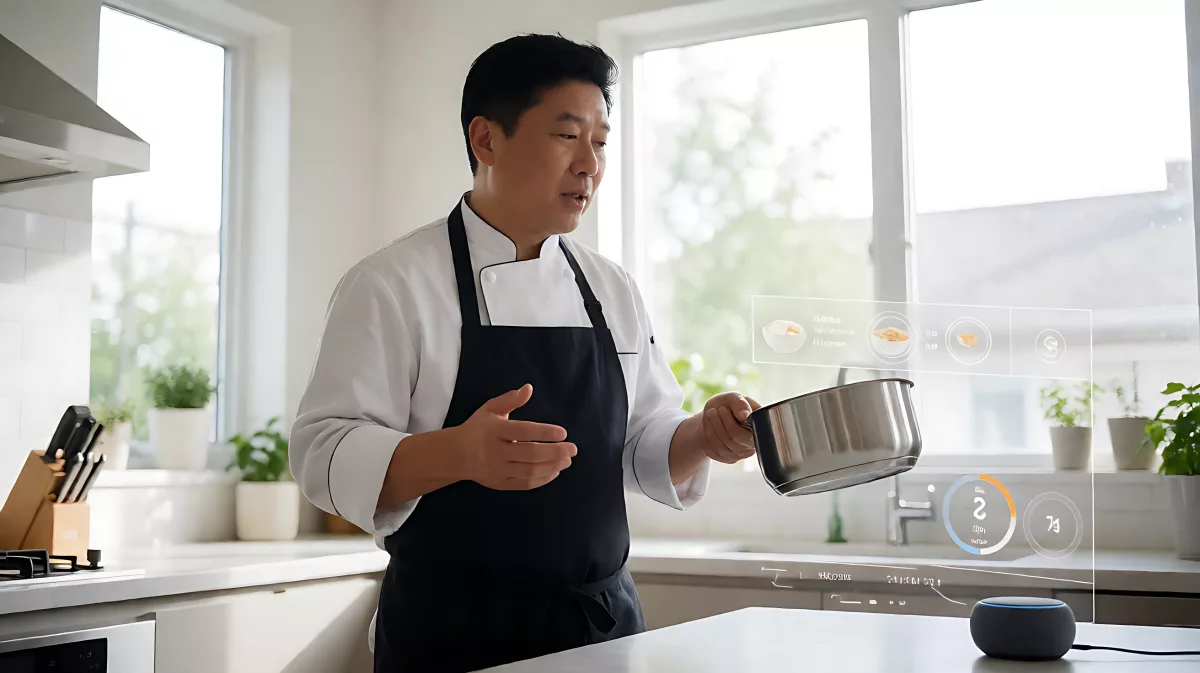
AI voice control is transforming kitchens by enabling hands-free cooking support and automating operations. Learn how these systems improve safety and efficiency for home users and commercial operators in 2026.
In 2026, AI voice control allows users to manage cooking steps and kitchen appliances hands-free, significantly improving safety and convenience. A recent study published in Iconic Research And Engineering Journals found that such systems can identify navigation commands with 92 percent accuracy and answer cooking questions with 86 percent accuracy. The National Restaurant Association also reports that 26 percent of operators now use AI tools, highlighting the shift from experimental tech to practical standard.
Why is voice control necessary in the kitchen?
Cooking often requires both hands for chopping, stirring, or handling hot items. Using a phone or laptop for recipes is unsafe and inconvenient. AI voice assistants solve this by listening to commands and providing audio guidance. This hands-free approach reduces the risk of slips and burns. It also allows users to focus on the food rather than digital screens. For home cooks, this means a smoother workflow. For professional chefs, it means better time management during service.
How do AI assistants process commands?
These systems rely on three core technologies. First, speech recognition converts spoken words into digital text. Second, an AI model interprets the intent behind the command. Third, a database retrieves specific recipe steps or appliance settings. The system then responds with audio. According to the 2026 research, the average response time is approximately 2.5 seconds. This speed is critical in a fast-paced kitchen. If the assistant is too slow, it disrupts the cooking rhythm. If it is too fast, users may miss details.
What are the key benefits of automated kitchens?
Safety and Comfort Voice control removes the need to touch wet or contaminated surfaces with electronic devices. This reduces the risk of cross-contamination and slips. Users can operate hot ovens or stoves without losing their grip on handles. Efficiency in Commercial Settings In restaurants, AI helps manage inventory and predict demand. The National Restaurant Association notes that back-of-house operations are the fastest area for ROI. Tools that track food waste and forecast sales help operators cut costs. For example, voice-ordered AI systems are now deployed at over 890 U.S. drive-thrus by major fast-food chains. Accessibility For individuals with mobility impairments or vision loss, voice-controlled appliances provide independence. They can turn on lights, adjust temperatures, and read recipes without physical interaction.
Which devices are compatible with voice AI?
Most modern smart kitchens use a central hub. This hub connects various devices via Wi-Fi or Zigbee. Common devices include smart ovens, refrigerators, and induction cooktops. Users can also control lighting and ventilation systems. The term "domotics" refers to this integration of building automation and robotics. As of 2026, the standard is moving toward fully interconnected ecosystems. This means your fridge can suggest a recipe, and your oven can preheat to the correct temperature automatically.
What are the challenges and limitations?
Accuracy and Noise Kitchens are noisy environments. Dishes clattering and appliances running can interfere with speech recognition. The 2026 study highlighted a 92 percent command accuracy rate. This means 8 percent of commands may be misinterpreted. Contextual understanding helps, but background noise remains a challenge. Privacy Concerns Voice assistants record and process audio data. Users must review privacy settings to understand what is stored locally and what is sent to the cloud. Choosing reputable hardware manufacturers is essential for data protection.
How does AI integrate with existing home automation?
Home automation systems, such as those controlling lighting and climate, are increasingly merging with cooking AI. A unified system can adjust the kitchen temperature based on oven usage. It can also control ventilation to remove smoke. This integration creates a responsive environment that adapts to user behavior. In the United States, the smart home market continues to grow, with millions of new devices installed annually. The trend is toward holistic home management rather than isolated appliances.
FAQ
Is AI voice control accurate enough for cooking?
Yes, recent tests show high accuracy for navigation and recipe queries. While background noise can pose challenges, modern systems handle typical kitchen environments well, making them reliable for hands-free use.
What is the cost of implementing a voice-controlled kitchen?
Costs vary by device. A basic smart speaker is inexpensive, while full integration with smart ovens and fridges is an investment. The return comes from increased efficiency, reduced waste, and enhanced safety.
Can AI voice assistants replace human staff in restaurants?
No, AI assists rather than replaces. It handles repetitive tasks like ordering and inventory. Human staff remain essential for creative cooking, customer interaction, and quality control. The goal is to empower workers, not displace them.