AI Trends 2026: GPT-6, Google Gemini & Healthcare Agents
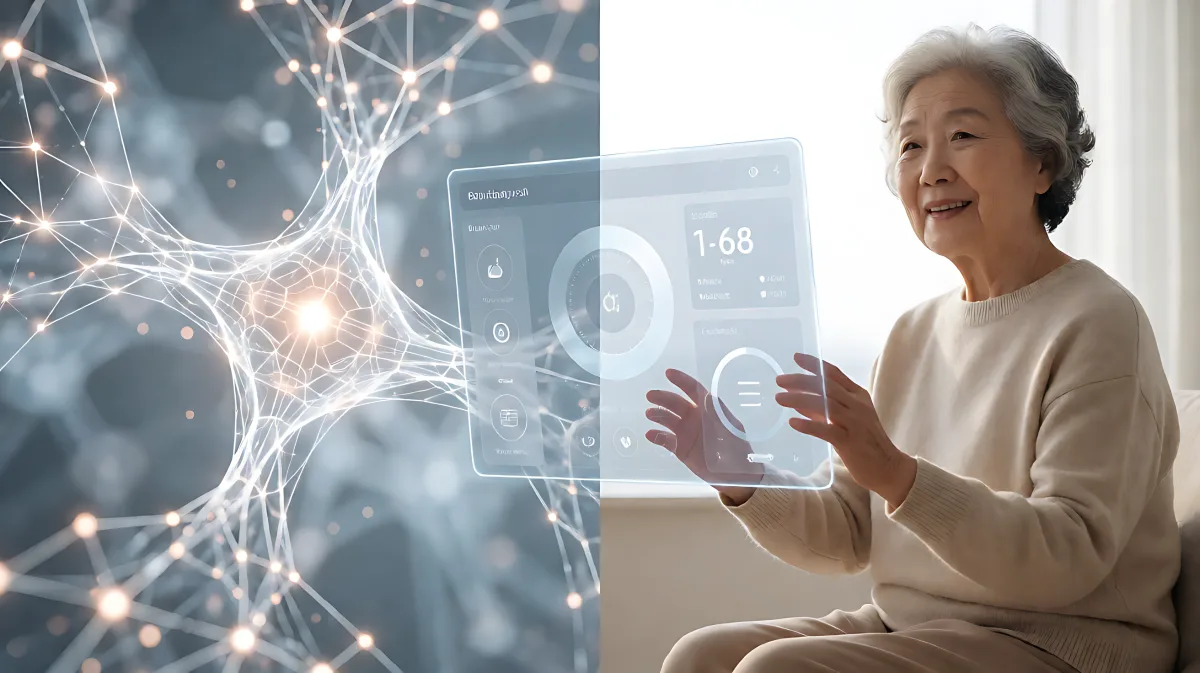
In 2026, artificial intelligence has moved beyond simple chat interfaces to become a workforce of autonomous agents. This year marks the arrival of OpenAI's GPT-6 and specialized AI operating systems that are transforming how we create, care for our aging population, and solve complex mathematical problems.
In 2026, artificial intelligence has decisively crossed the threshold from creative assistant to autonomous operator. The technology is no longer just about generating text; it is about executing complex workflows across industries. OpenAI has released GPT-6, a model designed for "Intelligent UI" that adapts to the user’s specific needs, while Google’s Gemini platform now allows users to transform PDFs into interactive animations and design 3D-printable parts in seconds. Meanwhile, specialized platforms like Sensi are applying agentic AI to senior care, claiming an 80% reduction in hospitalizations for clients in specific agencies.
How does GPT-6 change the user experience?
On October 7, 2026, OpenAI announced the deployment of GPT-6, marking a significant shift in how we interact with software. Unlike previous models that required specific prompts, GPT-6 features what the company calls "Intelligent UI." This interface is designed to be universally accessible, reducing the cognitive load on the user by interpreting intent rather than just syntax. OpenAI has also introduced "Dots" on September 29, 2026, a new product that further integrates AI into daily digital tasks. The company is actively collaborating with major businesses, such as Atlassian, to embed these capabilities into enterprise tools, and with Chip Ganassi Racing to use AI for performance analysis in motorsports. For the average consumer, this means your software will anticipate your next action, making technology feel less like a tool and more like a partner.
What are the latest creative capabilities in generative AI?
Google’s AI division has pushed the boundaries of generative media with the Gemini model. As of late 2026, the platform allows users to upload a simple video clip and transform the action within it—such as adding a fireball to a hand gesture—or convert a dense PDF document into an illustrated storybook animation that users can scrub through. You can even create retro-style portraits from a selfie, complete with 1980s laser studio backgrounds and clothing. These tools are not just for entertainment; they are being used to design 3D-printable replacement parts for furniture and to create custom soundtracks. This level of granular control over media generation means that creative barriers to entry are effectively non-existent for most users.
Can AI solve complex mathematical problems?
Yes. In September 2026, OpenAI shared research where their models proposed a solution to the Navier-Stokes problem, a major challenge in fluid mechanics. Additionally, a publication from August 1, 2026, detailed ten advances in mathematics and theoretical computer science driven by AI. This indicates that AI is no longer just pattern-matching; it is engaging in high-level abstract reasoning that assists researchers in areas previously reserved for human mathematicians. The "MentalHealthBench" published by OpenAI in September 2026 also suggests that AI is now being rigorously tested for psychological nuances, moving beyond raw data processing to emotional and cognitive understanding.
How is agentic AI transforming senior care?
The most impactful application of 2026 AI is likely in the healthcare sector, specifically in senior care. Sensi, an "Agentic Operating System" for care providers, has demonstrated that AI can act as a digital workforce. The platform uses three distinct agents: Care, Growth, and Ops. The Care agent provides 24/7 virtual assessments, using predictive insights to flag risks before they become emergencies. According to Susan Kahlau, owner of Visiting Angels in Pennsylvania, the system has reduced hospitalizations for her 200+ clients by 80%. This is a drastic improvement over traditional care models. The Ops agent automates logistical nightmares, such as caregiver call-offs and no-shows, while the Growth agent acts as a relentless inside sales team, nurturing leads and updating CRM data automatically. For agency owners, this translates to a reported 20% increase in revenue and 70% increase in operational efficiencies.
What does an agentic operating system actually do?
An agentic operating system is not a chatbot; it is a set of autonomous agents that have specific goals and can perform tasks without step-by-step human instruction. In the case of Sensi, the agents do not just provide information—they execute workflows. They manage schedules, communicate with family members, and monitor health data in real-time. This "chaos-proof" approach allows small care agencies to compete with large healthcare providers by leveraging the same level of data analysis and responsiveness. The technology essentially removes the administrative burden from human caregivers, allowing them to focus on the human connection aspect of care, which is often the most valuable service they provide.
What are the business implications of AI in 2026?
For businesses, the focus in 2026 is on efficiency and customer journey refinement. Companies like Virgin Atlantic are using ChatGPT Work to sharpen customer interactions, while startups like Model ML are using GPT-5.6 Sol to complete financial work more efficiently. Zapier has transformed its core marketing processes with these tools. The trend is clear: AI is moving from a marketing gimmick to a core operational utility. IBM’s recent buyer’s guides emphasize that tech leaders must now prepare their teams for AI agents and assistants, signaling that the era of simple API calls is over. The integration of AI into retail, seen with Albertsons Companies, shows that even traditional sectors are reimagining their inside-out processes to accommodate AI-driven logistics and customer service.
What are the risks and ethical considerations?
While the benefits are profound, the autonomy of these systems raises questions about accountability. When an AI agent makes a decision that leads to a negative outcome, who is responsible? The "Ironclad" publication by OpenAI in October 2026 focuses on advancing computer use, implying that AI agents can now interact with software interfaces at a near-human level. This capability is powerful but requires robust safety rails. The industry is currently establishing benchmarks, such as the MentalHealthBench, to ensure that AI systems can handle sensitive topics with appropriate care and accuracy. For users, it is crucial to understand that these systems are simulating autonomy, not possessing it. They are highly advanced tools that mirror human decision-making patterns based on vast amounts of data.
Frequently Asked Questions
Is GPT-6 available to all users now?
OpenAI announced GPT-6 on October 7, 2026, with a focus on "Intelligent UI for everyone." While enterprise integrations are rolling out with partners like Atlassian, the core capabilities are intended for broad consumer access through the ChatGPT platform, ensuring that the interface adapts to individual user skill levels.
How accurate is AI in medical diagnosis?
AI is not currently used for primary medical diagnosis but for predictive care and monitoring. In the senior care sector, tools like Sensi use AI to identify risks and predict hospitalization needs, which has shown an 80% reduction in hospital stays for specific client groups. It acts as a decision-support system for caregivers and doctors, not a replacement for medical professionals.
Can I use AI to design products for 3D printing?
Yes. Google’s Gemini platform allows users to generate 3D designs for specific purposes, such as replacement parts for furniture. The AI creates a design app where you can explore multiple options, turning a text or image prompt into a printable file, significantly lowering the barrier to custom manufacturing.
What is an "agentic operating system"?
It is a software framework where AI agents perform end-to-end tasks autonomously. Unlike traditional software that waits for user input, an agentic system proactively manages workflows, such as scheduling, data entry, and communication, based on its programmed goals and real-time data analysis.
Do AI agents replace human jobs in care services?
They replace administrative and logistical tasks, not human interaction. The goal of platforms like Sensi is to free up human caregivers from "chaos" and paperwork so they can spend more time with clients. The metric is often an increase in client satisfaction and a reduction in caregiver burnout, rather than a reduction in headcount.