How AI Helps Elderly Memory Care With Personalized Letters
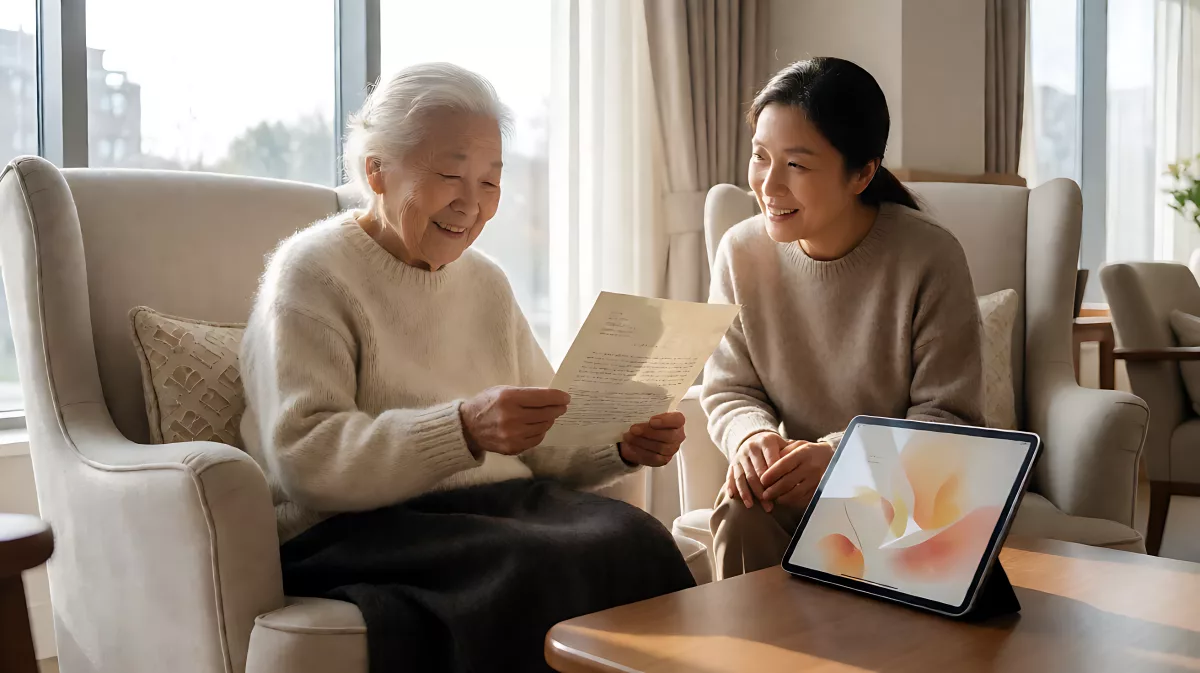
From digital handoffs to AI-generated reminiscence, technology is transforming elderly care. Explore how personalized letters and visual content help combat memory loss and social isolation for senior residents and their families.
AI-generated family letters and visual content are revolutionizing elderly memory care by combining reminiscence therapy with modern technology. These tools create personalized stories and images that help residents with dementia reactivate episodic memory, reduce anxiety, and strengthen family bonds across the US and UK.
Why Personalized AI Content Matters in Memory Care
For families dealing with a loved one’s declining memory, the challenge is not just medical but emotional. Social isolation and the loss of significant life milestones can significantly lower a senior’s quality of life. In care homes, residents often face daily routines that do not reflect their unique histories, leading to a fragmented sense of identity. Generative artificial intelligence offers a bridge between the past and the present by transforming scattered memories into coherent, engaging narratives. By producing personalized photos, short films, and written letters, technology supports the psychological wellbeing of elderly individuals in a way that generic care cannot match.
What Is Reminiscence Therapy and How Does AI Enhance It?
Reminiscence therapy is a well-documented clinical approach that uses photos, objects, and stories from a person’s past to improve mental health and reduce depression. Traditionally, this required significant staff time to collect and organize materials. AI streamlines this by taking verbal or written anecdotes from families and staff and converting them into visual or written media. This process activates the hippocampus, a brain region central to long-term memory, even in individuals with mild to moderate dementia. The novelty of AI-generated content—such as a colorized or animated version of a childhood home—often provokes stronger recall than static archival items.
How Does the Creation Process Work?
Creating these AI-supported family letters and visual stories is a collaborative journey. It is not a "plug and play" digital experience but a human-centric workflow where technology serves the emotional needs of the resident.
- Story Collection: Operators or care staff interview residents and their families to gather details about key life events, such as weddings, travel, or career milestones. Existing diaries or handwritten notes provide the raw material.
- Collaborative Prompting: A trained specialist works with the resident to refine the details. Asking specific questions like "What color was your mother’s kitchen?" turns the technical process of prompting an AI into a therapeutic dialogue.
- Content Generation: Advanced generative tools create realistic photographs of described moments, short video clips, or written letters. This content is often enhanced with evocative music or narrative voices.
- Shared Experience: The final pieces are presented in group or individual sessions. Families are encouraged to participate, turning a one-way care delivery into a two-way exchange of stories.
What Are the Benefits for Residents and Families?
The impact of these programs extends beyond simple entertainment. Research into generative AI in healthcare suggests that the active participation in creating memories promotes neuroplasticity. Residents report a reinforced sense of self, moving away from the "resident" label to their true identity as a person with a rich history. For families, the process offers a new channel for connection. It allows relatives who may not be present daily to contribute to their loved one’s emotional landscape, reducing feelings of guilt or distance often associated with long-term care.
What Is AI-Powered Care Coordination?
While creative AI helps with memory and emotion, other platforms focus on the logistical side of care. Tools like GetKeenCare and KinPass are changing how families and organizations manage the day-to-day details of senior support. These systems use AI to analyze patterns in behavior, medication adherence, and daily routines.
| Platform | Primary Focus | Key AI Feature |
|---|---|---|
| GetKeenCare | Senior home care matching | AI-driven caregiver recommendation and daily care summaries |
| KinPass | Complex care coordination | Behavioral pattern analysis and smart handoff briefs |
| Generative Center | Memory and emotional wellbeing | Visual content creation from personal stories |
For families managing a caregiver handoff at 8:00 PM, AI can provide a precise summary of the day’s events, medication times, and specific behavioral triggers. This reduces the risk of human error, such as missing a dose of medication or overlooking a change in mood. These platforms are built with privacy in mind, using encrypted data and role-based access to ensure that sensitive health information is shared only with authorized caregivers.
How Can Families Get Started With These Technologies?
Implementation usually begins with a pilot program in a care facility. Staff are trained to act as facilitators rather than just tech operators. The key is to start with small, significant memories. A letter from a great-grandparent, animated using a photo, or a video of a house they once lived in, can spark conversations that have been dormant for years. Organizations in the US and UK are increasingly adopting these scalable protocols, ensuring that informed consent and privacy protection are central to every step of the process.
What Does the Future of AI in Elderly Care Look Like?
The landscape of AI applications in healthcare is expanding rapidly. Beyond memory care, generative models are being used to improve language translation for international residents and to provide automated, empathetic responses in customer service for care organizations. The next step for AI in senior care is predictive intelligence. By analyzing long-term data from care logs, these systems will likely move from documenting the past to forecasting future health risks, such as falls or cognitive decline stages. This shift promises a more proactive approach to health, where the focus moves from reaction to prevention.
As we enter the next era of elderly care, the integration of AI will be measured not by its complexity, but by its warmth. The goal is a humanistic approach where technology serves to enhance human connection, ensuring that every story is valued and every family remains a central part of the care journey.
Frequently Asked Questions
Is AI memory care only for people with dementia?
No. While it is highly effective for those with mild to moderate dementia, AI-generated letters and visual stories also benefit elderly residents with cognitive decline or social isolation who do not have a formal diagnosis. The goal is emotional connection and identity reinforcement.
Do these platforms replace human caregivers?
No, these tools are designed to support and empower human caregivers. AI handles data analysis and content creation, freeing up staff and family members to focus on direct, compassionate interaction and physical care.
How do families protect the privacy of their elderly relatives’ data?
Leading platforms like KinPass and GetKeenCare are HIPAA-aware and use end-to-end encryption. Access is strictly role-based, meaning only authorized family members and specific staff can view sensitive health or behavioral logs.
Can I use AI to write a letter to a parent who has forgotten how to read?
Yes. Generative AI can create visual stories, animated photos, or videos with voiceovers that engage the senses beyond text. This allows residents who have lost reading skills to still enjoy their personal history through sound and image.
What is the difference between a care coordination app and a memory care AI tool?
Coordination apps like GetKeenCare focus on logistics, such as medication schedules and caregiver matching. Memory care tools focus on psychological wellbeing, using creative AI to stimulate recall and reduce symptoms of depression through personalized storytelling.