AI Creative Tools for Seniors: Cognitive Benefits Guide
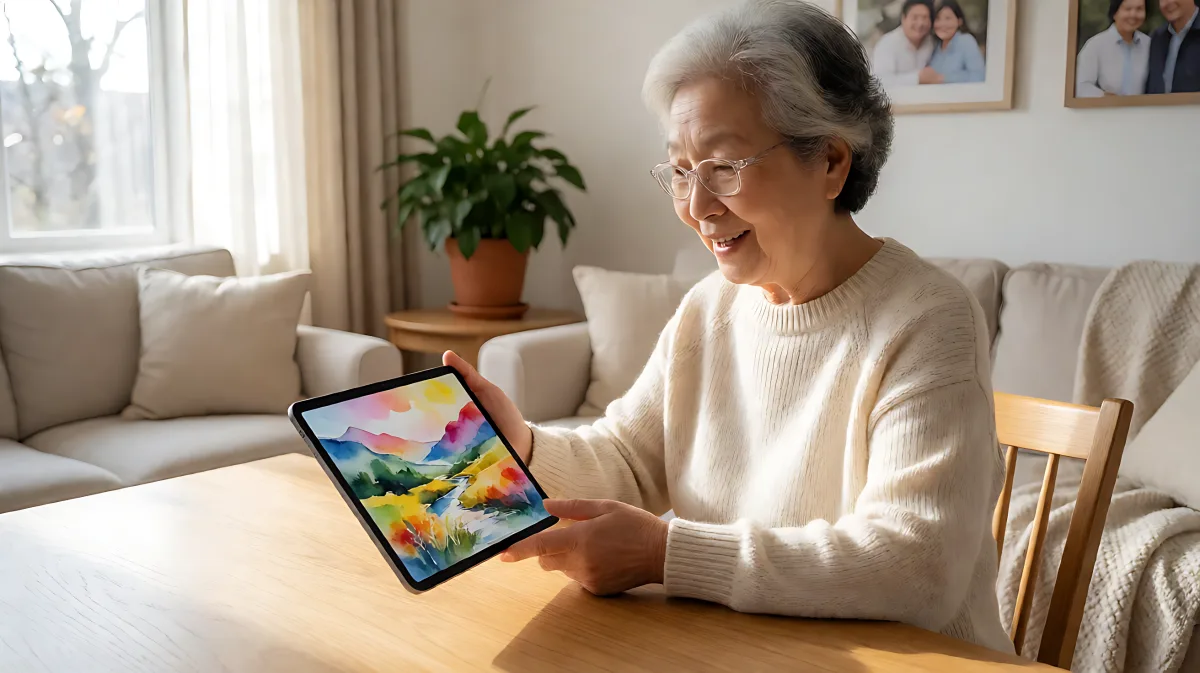
Generative AI is becoming a powerful ally for older adults seeking to keep their minds sharp. By turning simple verbal descriptions into art, music, or text, these tools lower the barrier to creative expression. Recent clinical data shows that engaging with AI-assisted creative activities can significantly improve cognitive scores and reduce anxiety, making digital art a viable therapy option for community-dwelling seniors.
Generative AI offers older adults a low-barrier path to cognitive stimulation by transforming verbal ideas into art, text, and music. Recent research indicates that engaging with AI-assisted creative tools can improve memory, executive function, and mood without requiring prior artistic training. By shifting the creative effort from manual dexterity to verbal narration and aesthetic judgment, these tools help keep the brain active and socially engaged, supporting healthier aging.
Why Digital Creativity Matters for the Aging Brain
For decades, art therapy has been used to support mental health, but traditional methods often require physical skill or access to trained therapists. Generative artificial intelligence changes this dynamic. Instead of needing steady hands to paint or play an instrument, seniors can now describe a scene, a feeling, or a story in plain language. The AI executes the visual or auditory translation, acting as a creative assistant that never runs out of ideas and offers no judgment. This shift is crucial because it lowers the entry barrier for those who might have been excluded from creative pursuits due to physical limitations or lack of formal training.
What Does the Latest Clinical Evidence Show?
A significant study published in the journal Frontiers in Public Health in August 2026 examined the impact of AI-assisted visual art therapy on older adults with mild cognitive impairment. The researchers recruited eighty participants from a community in Enshi City, China. Those in the intervention group participated in a 12-week program where they used generative AI to create images based on their own narratives. The results were striking: participants in the AI art group showed significantly higher scores on the Montreal Cognitive Assessment compared to the control group. Specifically, the study reported a large effect size for cognitive improvement, while also noting a measurable reduction in anxiety and depression levels. The gains were largely maintained even at a three-month follow-up, suggesting that the cognitive benefits of AI-driven creativity are not just fleeting but potentially lasting.
The theory behind these results lies in how the brain processes these tasks. When a senior describes a painting to an AI, they are engaging the language production pathway, retrieving semantic concepts, and constructing syntax. When they choose between generated options, they are exercising executive control and aesthetic judgment. This dual engagement provides a targeted cognitive workout that general social activities may not offer to the same degree.
How to Start Creating with AI: Practical Tools
Many seniors worry that technology is too complex. However, the most effective tools for creative writing and art are designed for simplicity. They operate through conversational interfaces, meaning you do not need to write code or learn complicated software menus. You simply type what you want, much like sending a text message to a friend.
What Are the Best AI Writing Companions?
For those who have always wanted to write a memoir or a novel but felt blocked, AI writing assistants are game-changers. Platforms like ChatGPT allow users to prompt the system with simple requests such as "Help me write a poem about my garden" or "Draft a letter to my granddaughter about my childhood." The AI generates a draft that the user can edit, expand, or use for inspiration. This process keeps the user in the driver's seat. They provide the context, the memories, and the emotional tone, while the AI handles the structural and linguistic aspects. For seniors who use Google products, tools like Gemini are integrated into familiar apps, reducing the need to learn new platforms. This seamless integration encourages consistent use, which is key for cognitive maintenance.
Specialized apps also offer guided storytelling. These programs ask specific questions about past events, career milestones, or family traditions. The AI then helps shape these answers into polished narratives. This structured approach can be less intimidating than a blank page. It transforms memory work into a collaborative process, making it easier to capture and share life stories with future generations.
How Can Seniors Create Digital Art?
Visual art is another powerful outlet for cognitive engagement. AI art generators turn text descriptions into stunning images. A user can request a watercolor landscape, a realistic portrait, or an abstract design simply by typing a sentence. Tools like Canva offer user-friendly interfaces with large buttons and clear templates, allowing users to turn AI-generated images into greeting cards or photo collages. Other platforms focus on community and challenges, providing a social aspect to the creative process. Users can share their creations, receive feedback, and participate in daily art prompts, which adds a layer of social connection to the cognitive benefits.
Music is also accessible through AI. Platforms like Suno allow users to generate complete songs with vocals and instrumentals from a simple description. For example, a user might ask for "a gentle folk song about autumn leaves." The AI creates a track that can be shared with family or used for personal enjoyment. This capability removes the need to read sheet music or master an instrument, allowing seniors to explore musical creativity purely through imagination and description.
How Should Families Support Safe AI Use?
While the benefits of AI for cognition and mood are clear, it is essential to introduce these tools with care. AI companions and creative tools are not replacements for human connection. They are supplements that can reduce isolation and provide mental stimulation. However, over-reliance can sometimes occur, particularly if an individual begins to substitute AI interaction for real-world social engagement.
What Safeguards Are Necessary?
Experts recommend that families and caregivers set clear boundaries. It should be understood that AI is a tool for support, not a substitute for medical advice, professional care, or deep human relationships. When introducing an AI companion, it is helpful to choose tools that actively encourage real-world connection, such as reminders to call family or join community events. Furthermore, because some AI systems can generate misleading information, users should be encouraged to verify health-related answers with trusted medical providers. Privacy is also a concern; users should review data settings to ensure their personal information is protected. By maintaining a balance between digital creativity and human interaction, seniors can maximize the cognitive and emotional rewards of AI without falling into the trap of isolation.
Frequently Asked Questions
Is AI art therapy proven to help with dementia?
While it is not a cure for dementia, recent studies show that AI-assisted art therapy can slow cognitive decline and reduce symptoms of anxiety and depression in individuals with mild cognitive impairment. The active engagement in describing and judging images helps maintain brain pathways associated with language and executive function.
Do I need to know how to code or be a tech expert?
No. Modern generative AI tools are designed to be accessible through simple text prompts. If you can type a sentence or speak into a microphone, you can use these tools. The interface is conversational, meaning you interact with the AI as you would with a human assistant, requiring no specialized technical knowledge.
Can AI replace social interaction with family?
AI should not replace human connection but can complement it. The goal of using AI for seniors is to enhance quality of life and cognitive health. Many tools are actually designed to facilitate human contact by generating content that can be shared with family or by prompting users to make calls or attend community events. It is a bridge, not a wall.
How often should seniors use these tools for benefits?
Consistency is key. The clinical trials referenced earlier used a 12-week program with regular sessions. Engaging in creative AI activities a few times a week can provide sufficient cognitive stimulation. The exact frequency depends on individual preference, but regular, intentional use is more beneficial than sporadic, passive engagement.
Are there free options for AI creative tools?
Yes. Many major platforms offer free tiers that are sufficient for creative writing, art generation, and music composition. For example, some AI music generators provide a daily allowance of free credits to create songs, and art platforms often allow users to generate a certain number of images daily without payment. This makes the technology accessible without a significant financial barrier.