The Rise of AI in Senior Care and Everyday Technology
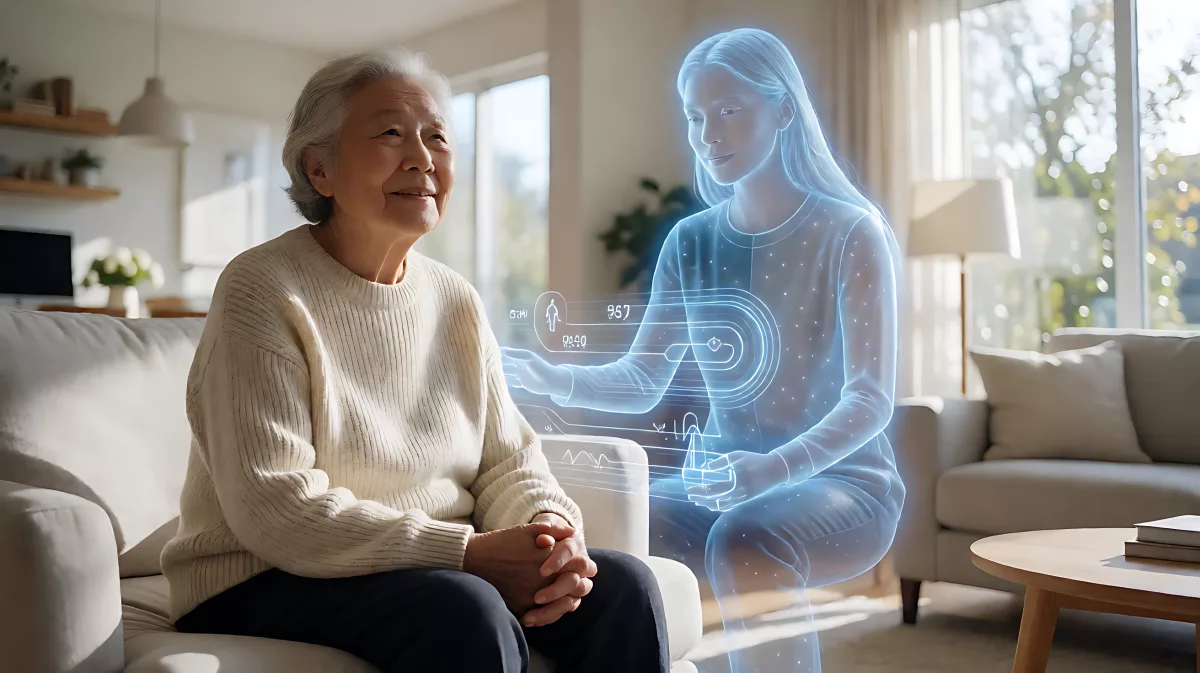
AI is no longer just a tool; it is becoming an active partner in healthcare and operations. Explore how new agentic systems are enhancing the quality of life for seniors and streamlining care delivery.
Artificial intelligence has evolved from a theoretical concept into a practical framework that actively manages daily life, particularly in healthcare. Modern AI systems now function as autonomous agents that monitor senior health in real-time, predict risks like falls, and automate complex operational tasks. This shift allows individuals to age in place with greater safety and independence, while care providers benefit from reduced burnout and improved data-driven decision-making.
What Is Driving the Shift to Agentic AI?
Artificial intelligence is the capability of computational systems to perform tasks typically associated with human intelligence, such as learning, reasoning, and decision-making. While the field has roots in mid-20th-century academic research, the current landscape is defined by the rise of "agentic" AI. These systems do not just answer questions; they take action. They perceive their environment, use learning to maximize goal achievement, and operate with a level of autonomy previously reserved for humans. This evolution is fueled by advances in deep learning and transformer architectures, which allow machines to process vast amounts of data, including text, images, and audio, to generate content and make complex decisions.
How Is AI Changing Senior Care and Home Safety?
For the growing population of seniors who prefer to remain independent at home, AI offers a powerful safety net. Research institutions, such as the Stanford School of Medicine, are designing integrated solutions that use non-intrusive sensors to track 17 specific activities of clinical relevance. These include eating, sleeping, falls, and even subtle changes like slowed movements or day-night reversals. By translating multi-sensor inputs into situational assessments, these systems aim to detect health risks earlier and provide timely, personalized interventions. This technology helps avoid unnecessary and costly relocation into institutional care, allowing seniors to extend their quality of life in familiar environments.
Commercial platforms are translating this research into practical tools. Companies like Sensi, a provider of trusted 24/7 home care AI, utilize an "agentic operating system" to unify care, operations, and growth into a single workflow. The system provides always-on assessment, capturing holistic insights that give visibility into a client's daily life. One notable outcome reported by a partner agency, Visiting Angels, is an 80% reduction in hospitalizations for their senior clients who utilize these AI-driven monitoring tools. This demonstrates that proactive AI intervention can significantly improve health outcomes.
How Do AI Agents Streamline Care Operations?
For care providers, the benefits of AI extend beyond patient monitoring to operational efficiency. Managing a care agency often involves chaotic scheduling, communication gaps, and staff burnout. AI agents are now being used to automate demand management and streamline back-office tasks. Sensi, for example, deploys specific agents for different functions. The "Ops Agent" handles automated call-offs and caregiver oversight, ensuring that coverage remains consistent even when staff are unavailable. One operator in Florida noted that caregiver no-shows have plummeted since implementing these automated systems, as the AI manages traffic and scheduling in real-time.
Furthermore, AI is tackling the financial and administrative challenges of care agencies. A dedicated "Growth Agent" can perform the work of an entire inside sales team. It nurtures leads, updates the customer relationship management (CRM) system autonomously, and communicates with potential clients in multiple languages. This capability allows small agencies to compete with larger organizations by responding to inquiries instantly and efficiently. The result is a measurable increase in revenue and efficiency, with some agencies reporting 70% increased efficiencies and significant cost savings by leveraging digital workforces.
What Are the Technical and Ethical Considerations?
As AI systems become more autonomous, the technical architecture supporting them is crucial. Developers and integrators are moving away from simple script-based connections toward more secure and scalable methods. For instance, the development community is discussing the migration from basic external scriptlets to RESTful APIs using OAuth for better security and integration. While basic authentication methods exist, industry experts recommend using modern standards like OAuth 2.0 to ensure data integrity, particularly when handling sensitive health information. This technical underpinning is vital for ensuring that AI agents can safely interact with external systems without compromising user privacy.
Ethical and safety concerns remain a primary focus. The same organizations leading the AI boom are now addressing the potential existential and environmental risks of these technologies. The environmental impact of running large-scale AI models is a growing discussion point, prompting a push for more energy-efficient computing. In healthcare, the emphasis is on "human-centered design." Ensuring that AI provides supportive, non-intrusive monitoring that respects the dignity of seniors is a key goal of research partnerships. The objective is not to replace human empathy with code, but to enhance it by removing the administrative burdens that cause stress and reduce quality of care.
Frequently Asked Questions
What is an AI agent in the context of senior care?
An AI agent in senior care is an autonomous software system that can perform specific tasks, such as monitoring vital signs, scheduling caregivers, or managing client communications, with minimal human intervention. It uses data from sensors and previous interactions to make decisions that improve safety and operational efficiency.
Are AI monitoring systems for seniors invasive?
Most modern systems are designed to be non-invasive. They often use ambient sensors, computer vision, and wearable technology to track movement and vital signs without requiring the senior to manually input data or wear cumbersome devices. The goal is to monitor activities of daily living in the background.
How does AI help reduce caregiver burnout?
AI reduces burnout by automating time-consuming administrative tasks, such as scheduling, call-out coverage, and client follow-ups. By handling these "chaos-proof" operations, human caregivers can focus on providing direct, empathetic care, while the AI handles the logistical and data-heavy aspects of the job.
Is it secure to connect AI tools to external healthcare systems?
Security is achieved through robust authentication protocols, such as OAuth 2.0, which ensures that data exchanged between AI platforms and other systems remains encrypted and verified. Modern AI architectures are built with these security standards in mind to protect sensitive patient data.