Time Blocking Hobbies for Adults: A Practical Guide
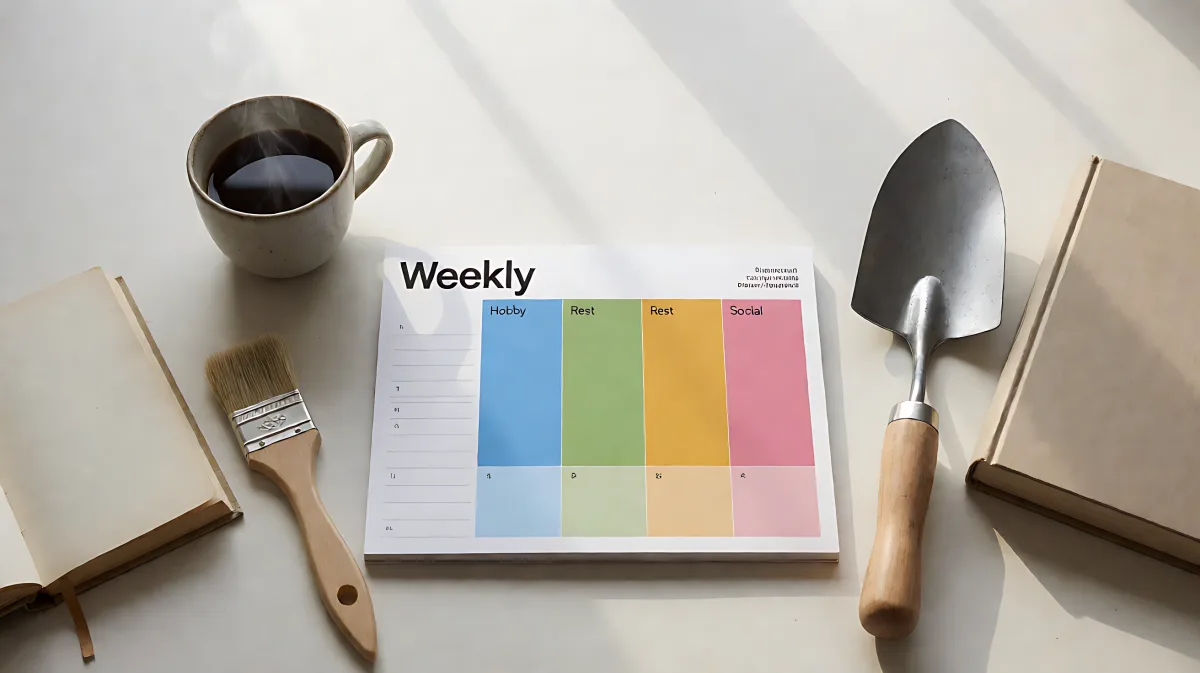
Struggling to find time for leisure? Time blocking hobbies allows you to schedule rest and creativity intentionally. Here is how adults can protect their free time.
Time blocking hobbies involves scheduling specific, protected time slots in your calendar for leisure activities. By treating recreation with the same priority as work or appointments, adults can ensure regular access to creative, social, or physical pursuits that enhance mental well-being without feeling guilty about stepping away from professional duties.
Why do adults need to schedule their leisure?
In a professional environment where productivity is highly valued, leisure often becomes an afterthought. Many adults find that when they are not working or managing household responsibilities, they default to passive consumption, such as scrolling through social media or binge-watching television. These activities can sometimes leave individuals feeling more drained than rested. By intentionally planning hobbies, you shift from passive consumption to active engagement. This approach acknowledges that rest is a vital component of a healthy lifestyle, not just a reward for completing tasks.
The concept of time blocking extends beyond work productivity. It applies to personal care and intellectual growth. When you assign a specific time for a hobby, you create a psychological container for that activity. This structure helps prevent leisure from bleeding into work time and ensures that your personal interests receive dedicated attention. It transforms ambiguous free time into concrete experiences, whether that is an hour of gardening in the morning or a session of pottery in the evening.
How do you implement a hobby time block in a busy schedule?
Implementing time blocks for hobbies requires honesty about your current availability and energy levels. You do not need large chunks of time to benefit from leisure. Even thirty minutes can be enough to start a journaling session or solve a jigsaw puzzle. The key is consistency over duration. Many experts in productivity suggest starting with the 'two-minute rule' or small, manageable blocks that fit into existing gaps in the day.
- Identify your prime energy windows: Some people feel most creative in the early morning, while others prefer winding down with a craft at night. Match your hobby to your natural energy rhythms.
- Be realistic about time: If you only have ten minutes, choose a quick activity like sketching or stretching. Do not schedule an hour-long pottery session if you only have thirty minutes of free time.
- Reduce friction: Keep your hobby supplies visible and accessible. If you want to knit, keep a small project and yarn on your living room chair. If you plan to read, keep a book within reach.
- Protect the time: Once the block is on your calendar, treat it as a non-negotiable appointment. Notify household members of your unavailability during this window.
What are the best low-pressure hobbies for adults?
The most effective time-blocked hobbies are those that offer a low-stress, high-reward experience. They should not feel like additional chores. Ideally, they allow for a state of flow, where you lose track of time due to absorption in the task. Social, creative, and outdoor activities are particularly popular among adults seeking balance.
Which creative hobbies fit into small time blocks?
Creative pursuits are excellent for time blocking because they can be paused and resumed easily. Journaling requires only a pen and paper, and five minutes can help process the day's events. Drawing or sketching allows for quick observational practice, such as sketching objects in your room or using a beginner tutorial. Knitting or crocheting is highly portable; you can do this while waiting for an appointment or resting on the sofa. The repetitive nature of these activities can be meditative, providing a mental break from complex problem-solving at work.
Painting is another flexible option. You can buy pre-primed canvases and follow a guided 'paint and sip' style kit, which removes the decision-making fatigue of choosing a subject. Similarly, cooking or baking can be a creative outlet rather than a chore if you view it as an experiment rather than a meal-prep task. Spending time learning a new recipe or decorating cookies can provide tangible satisfaction and sensory engagement.
How can social activities be time-blocked for connection?
Many adults suffer from isolation, making social hobbies a crucial part of time management. Board games or card games are easy to schedule because they require a specific number of people and a set timeframe. Joining a book club or a local workshop provides built-in structure. For example, a pottery class or a community garden group offers natural social interaction without the pressure of hosting. Walking groups combine physical activity with social connection, and can be scheduled during a lunch break or after work. When you block time for social hobbies, you are actively investing in your support network, which is a proven buffer against stress.
Do active hobbies help with stress reduction?
Movement-based hobbies are powerful tools for decompression. Pickleball has seen a surge in popularity among adults in the US and UK, with many communities organizing weekly playgroups. It is accessible, social, and physically engaging without the high impact of traditional sports. Yoga or swimming can be scheduled for the early morning to start the day with intention. Even gardening provides light physical activity, involving digging, planting, and weeding, which connects you with the seasons. Cycling or walking for pleasure, rather than exercise, shifts the focus to enjoyment and exploration.
What role does technology play in hobby planning?
While hobbies are often seen as a way to disconnect from screens, technology can facilitate the planning process. Many adults use calendar apps to block out 'leisure' slots just as they do 'work' meetings. Setting reminders can help you remember to pick up your guitar or start your garden care routine. However, the goal is to step away from devices during the actual hobby time. Using a digital prompt or tutorial is fine, but the rest of the block should be dedicated to the physical or social experience.
How do you maintain a hobby routine without burnout?
Flexibility is key. If a time block feels like a new job, you may be choosing the wrong activity or too much time. It is okay to skip a block or switch to a simpler hobby. The objective is to ensure that you are getting regular doses of joy and disconnection. If you find that your current hobby is draining rather than recharging, use the time block to explore a different interest. Thrifting or visiting a library can be quick, low-commitment ways to find new creative inspiration or physical objects that spark curiosity. The variety prevents boredom and keeps the practice of time blocking fresh.
Frequently Asked Questions
How much time should I block for a hobby?
Start with as little as 15 to 30 minutes. Consistency is more important than duration. A short, regular session is easier to sustain than a long, infrequent one. You can always expand the block as you build the habit.
What if I don't have time for a hobby?
Time is always available if you prioritize it. Audit your current schedule to find small gaps, such as waiting for tea to brew or the time after dinner before bed. Micro-hobbies like reading two pages, sketching one object, or doing five minutes of meditation can fit into these gaps and still provide a mental reset.
Can work-related tasks be considered a hobby?
Generally, no. For a hobby to be restorative, it should be distinct from your professional identity. If your job involves coding, coding might not be relaxing. Instead, choose an activity that engages a different part of your brain or body, such as pottery or hiking, to ensure true recovery.
Do I need to be good at the hobby?
Absolutely not. In fact, pressure to perform can undermine the relaxation benefit. The goal is enjoyment and process, not mastery. Embrace being a beginner; the learning curve is part of the fun and provides a sense of progress independent of work metrics.