Senior Planning Notebook: Manage Appointments & Medications
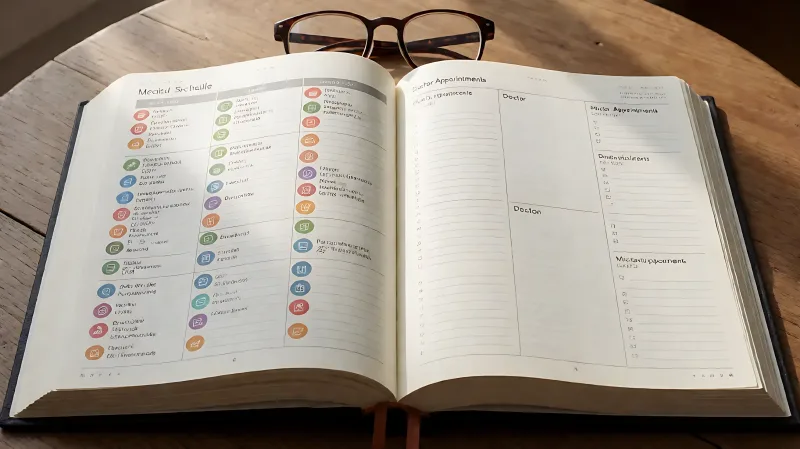
A senior planning notebook serves as a central hub for managing doctor visits and medication schedules. This guide explains how to structure your notes to improve safety and clarity.
A dedicated senior planning notebook acts as a command center for managing complex healthcare routines. By consolidating doctor visits, medication schedules, and health symptoms into one large-print log, seniors and caregivers can reduce errors and maintain consistency. This tool bridges the gap between fragmented digital reminders and static prescription labels, providing a tangible record that is easy to review during clinical consultations.
For more information, see NIA medical appointment guidance from the National Institute on Aging.
Why does a physical planning notebook matter for older adults?
While digital apps offer convenience, many older adults prefer the tactile and visual clarity of a physical notebook. The World Health Organization notes that medication adherence in older populations is a critical health challenge, with roughly half of seniors not taking their medications as prescribed. A physical log helps combat this by creating a visible, daily ritual. It reduces cognitive load by removing the need to memorize multiple dosing times or appointment details. Furthermore, a paper-based system does not require battery power or technical literacy, making it accessible to individuals with digital fatigue or low tech confidence. It serves as a static document that can be easily photographed and shared with new doctors or pharmacists without navigating proprietary app ecosystems.
What should you include in a senior planning notebook?
An effective planning notebook is more than a blank diary. It must be structured to capture specific medical data points. According to guidance from the Centers for Disease Control and Prevention on chronic disease management, keeping a detailed health history is essential for proactive care. Your notebook should contain four core sections:
- Appointment Log: A section for recording the date, provider, location, and outcome of every medical visit.
- Medication Schedule: A weekly grid that lists drug names, dosages, and specific times of day (e.g., morning, noon, evening).
- Symptom Tracker: A daily column for noting side effects, pain levels, or mood changes to correlate with medication timing.
- Emergency Information: A quick-reference page listing allergies, blood type, current doctors, and pharmacy numbers.
How do you organize a medication schedule for clarity?
Medication errors often occur due to confusion between similar-looking pills or missed doses. To mitigate this risk, the Planning Notebook approach recommends visual segmentation. Use color-coding to distinguish different times of day. For example, you might use blue ink for morning medications and red ink for bedtime doses. This visual cue helps prevent double-dosing or skipping a regimen. The Consumer Product Safety Commission advises that safety in home environments begins with reducing confusion. Large-print formats, typically 14-point font or larger, are crucial for seniors with age-related vision changes. When setting up the schedule, leave margins wide enough to write down pharmacy refill dates. If a medication is dispensed in a 30-day supply, note the exact day the bottle runs out so you can reorder with buffer time. This prevents the common scenario of being without critical prescriptions during a vacation or weekend.
What features make a planner accessible for caregivers?
In shared care situations, such as when adult children, home aides, or spouses manage a senior's health, communication is vital. A planning notebook acts as a neutral record that everyone can access. Unlike a private phone note, a paper log placed in a central location, like the kitchen or medication station, is visible to all parties. When a caregiver checks off a dose, they can add a small star or checkmark. This creates a transparent history that prevents duplication of efforts. If a new nurse joins the care team, they can review the last two weeks of the notebook to immediately understand the patient's routine, recent symptom fluctuations, and upcoming appointments. This centralized documentation fosters trust among family members and ensures that care remains consistent regardless of who is on duty.
How can you prepare for doctor visits using your notebook?
Medical appointments are often short, lasting only 10 to 15 minutes. Without a prepared list, valuable time is spent recalling symptoms or medications. Use the notebook to draft a specific question list for each visit. Before the appointment, review the symptom tracker to identify patterns. For instance, if dizziness occurred on three separate days, note this to ask the doctor about medication adjustments. Bring the physical notebook with you to the appointment. Many seniors prefer the stability of a physical log over a digital note on a phone screen, which can be distracting. After the visit, immediately write down the doctor's new instructions, any medication changes, and the date of the next follow-up. This immediate recording ensures accuracy and prevents reliance on memory, which may fade quickly after the stress of a clinic visit.
When should you update your planning system?
Your healthcare needs are dynamic. A planning notebook requires regular maintenance to remain useful. Review the medication schedule every time you receive a new prescription or when a doctor discontinues a drug. Update the emergency information page annually to ensure phone numbers and insurance details are current. The National Institute on Aging suggests that regular health reviews are key to successful aging. If you notice that the notebook is becoming cluttered or difficult to read, it may be time to start a new volume. Archiving the old notebook allows you to keep a historical record of your health journey, which can be incredibly valuable for long-term condition management. Consistency in updating the tool is just as important as the tool itself.
Frequently Asked Questions
What is the best size for a senior planning notebook?
A standard 8.5 by 11-inch format is generally recommended because it provides ample space for large-print writing and detailed notes. However, a smaller 5 by 8-inch pocket notebook is better for carrying to medical appointments, while the larger format stays at home for daily use.
How often should I log my symptoms in the notebook?
Log symptoms daily if you are managing a chronic condition or new medication. For stable patients, a weekly summary is often sufficient. Focus on recording changes in intensity, new side effects, or times when symptoms occur relative to medication doses.
Can I use a digital app instead of a paper notebook?
Digital apps are effective for reminders but lack the physical accessibility for some seniors. A hybrid approach is often best: use a physical notebook for the master record and questions for doctors, and a simple digital timer or app for daily pill alerts. This ensures you have a backup if technology fails.
Where should I keep the planning notebook?
Keep the master notebook in a central, safe location at home, such as the kitchen table or a dedicated medication cabinet. For appointments, bring it with you. If a caregiver is involved, ensure they know the location so they can add observations or check off tasks without needing to ask for the book.