Senior Mental Health Tech Failures Explained
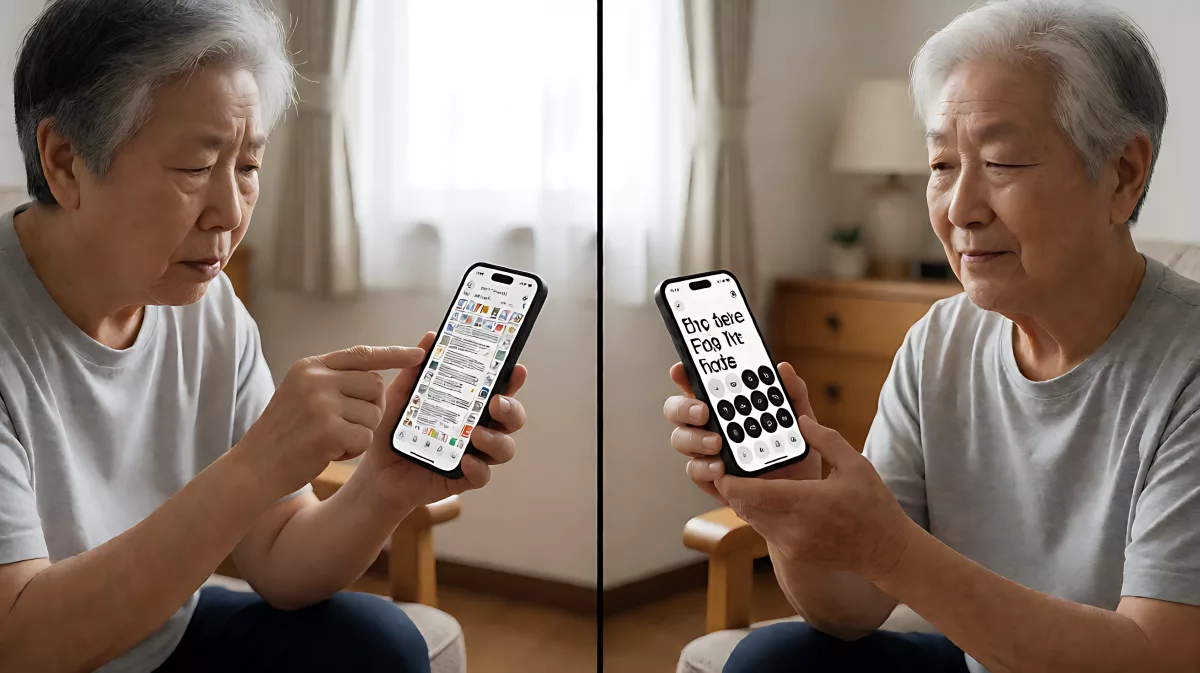
Despite a booming market, most mental health apps ignore older adults. This guide breaks down the specific accessibility and compliance traps that make these tools useless for seniors, plus what actually works in 2026.
Digital mental health tools frequently fail to support older adults because they prioritize complex user interfaces over accessibility, ignore age-specific cognitive changes, and miss essential compliance requirements. In 2026, while the app market is projected to grow at an 18 percent compound annual growth rate, specific segments for seniors remain underserved. Most applications rely on small text and rapid interactions, which directly conflict with the visual and motor decline common in elderly users.
Why standard mental health apps fail seniors
The global mental health app market is highly competitive, driven by a shortage of clinical therapists. However, building a product for a younger demographic does not automatically translate to a product that works for someone over 65. Many platforms lack the foundational design necessary to accommodate the natural physiological changes that occur as people age.
- Visual impairment: As seniors age, their eyes often require more light and larger contrast to read text. Standard app interfaces that rely on light grey text or tiny font sizes create immediate barriers.
- Motor control: Age-related changes in bone and joint flexibility can make fine motor tasks, like tapping small buttons on a screen, frustrating and difficult.
- Cognitive load: Users with mild memory lapses or slower processing speeds struggle with complex navigation menus that require multiple steps to complete a simple task.
What do developers get wrong in their design
Industry guides note that a successful Minimum Viable Product (MVP) should feature secure authentication, mood tracking, and crisis support. Yet, these features are rarely adapted for the senior demographic. For instance, a crisis button that requires two taps and a password entry defeats its purpose for a distressed older user who is already cognitively overloaded.
Where does the UI fail at the onboarding stage
Onboarding is a major drop-off point. Standard apps ask users to link social media accounts, create complex passwords, and complete lengthy questionnaires. For a senior, this often results in abandonment before they ever reach the actual wellness features. Successful design requires biometric login that is highly intuitive and minimal text-based setup.
Is AI chatbot therapy safe for the elderly
AI chatbots are expanding rapidly in mental health apps, but they pose unique risks for seniors. Older adults may rely heavily on digital companions for social interaction. If an AI chatbot provides a generic response to a serious medical symptom or cognitive decline, it could cause severe harm. Clinical validation must be tailored to detect age-specific language patterns that indicate dementia or severe distress.
Which compliance rules trip up developers
Regulatory compliance is non-negotiable, but it is often an afterthought. US-based apps must strictly adhere to HIPAA, which governs the handling of sensitive patient data. In Europe, GDPR adds another layer of complexity. Many developers realize late that a mood tracking app that stores health-related data is legally considered a medical device in many jurisdictions, requiring FDA approval in the US.
| Compliance Area | US Requirement | Global Requirement |
|---|---|---|
| Patient Data | HIPAA | GDPR |
| Device Regulation | FDA (Software as a Medical Device) | EMA / MDR |
| Crisis Interventions | Psychiatric Safety Act | Local Health Regulations |
How can older adults navigate current apps
While technology developers work on improving their products, older adults and their families must be proactive. The best approach is to start with simple, single-function apps rather than comprehensive platforms.
- Limit screen time: Prolonged interaction with complex apps can increase anxiety and sensory overload.
- Use physical aids: Pairing a digital app with a physical journal can help mitigate memory lapses and make tracking more tangible.
- Involve caregivers: In regions like St. Louis, geriatric case managers and family members can set up the digital environment, managing passwords and notifications so the senior only sees a simplified interface.
What does the market look like in 2026
As of 2026, the mental health tech sector continues to mature. The focus is shifting from just generating revenue to ensuring clinical efficacy and long-term retention. Investors are increasingly looking for apps that can integrate with broader Electronic Health Records (EHR). If your business model targets the elderly, you must prioritize accessibility from the very first line of code. It is not enough to just make an app that works for a 25-year-old; you must design for the user who has half the visual acuity, slower reaction times, and heightened vulnerability to digital fatigue.
FAQ
Are mental health apps safe for seniors with cognitive decline?
Apps can be helpful, but they must be carefully monitored by a human caregiver. A standard app cannot replace a licensed geriatric professional. If a user is experiencing rapid cognitive decline, the digital interface can become a source of confusion rather than comfort.
What is the biggest regulatory hurdle for a mental health app in 2026?
Proving clinical validity is the biggest hurdle. With growing market competition, regulatory bodies require robust data showing that the app actually improves patient outcomes, not just that users log into it frequently.
Can a senior use a mental health app without a smartphone?
Yes. Web-based platforms are available, and many teletherapy services can be accessed via standard computers. Voice-activated smart speakers also offer a highly accessible, hands-free alternative for seniors who struggle with touchscreens.
How does HIPAA affect a mood tracker app?
If a mood tracker stores health data, HIPAA requires end-to-end encryption for any data in transit and strict access controls. Developers cannot store the data on standard cloud servers without specific Business Associate Agreements (BAAs).