Meal Prep Automation Scripts: 5 Ways to Save 5 Hours a Week
Stop wasting hours planning dinner. Learn how to adapt warehouse-grade automation strategies, including standardized workflows and simple coding scripts, to streamline your home meal prep and reduce decision fatigue.
Automating meal prep does not require robots; it uses low-tech systems like standardized checklists, batch cooking waves, and simple coding scripts to cut decision fatigue. By adapting warehouse-grade logistics principles to your home, you can save approximately five hours per week and reduce food waste by 30%, allowing you to spend more time enjoying food rather than planning it.
How do warehouse principles improve home kitchen efficiency?
In 2026, automation strategies have matured from isolated gadgets to integrated workflows that balance technology with human execution. According to the Connors Group's 2026 playbook on warehouse design, the biggest gains in productivity come from system design and standardized processes, not expensive equipment. This shift allows home cooks to apply professional logistics tactics—such as zone optimization and feedback loops—to their kitchens. The result is a structured environment where tasks are predictable, reducing the mental load of daily cooking decisions.
Warehouses rely on Standard Operating Procedures (SOPs) to ensure reliability. In a home setting, this translates to creating simple, written checklists for core tasks like breakfast prep or dinner assembly. By posting these micro-SOPs inside cabinet doors or on the fridge, family members can complete tasks without memorizing steps. This standardization ensures that if one person is busy, another can take over the process seamlessly, maintaining consistency in meal quality and preparation time.
What is batch cooking and how do meal waves work?
Batch processing, or 'wave scheduling,' groups similar tasks to minimize setup time. In distribution centers, wave picking groups orders to allow staff to move efficiently. You can apply this by dedicating specific blocks of time to batch tasks. For example, a 90-minute weekend wave might involve cooking two proteins and a grain batch, while a 30-minute evening wave focuses on chopping greens and making a quick dressing. This approach reduces the total number of times you heat up the stove or wash dishes, significantly lowering the energy and time required for daily meals.
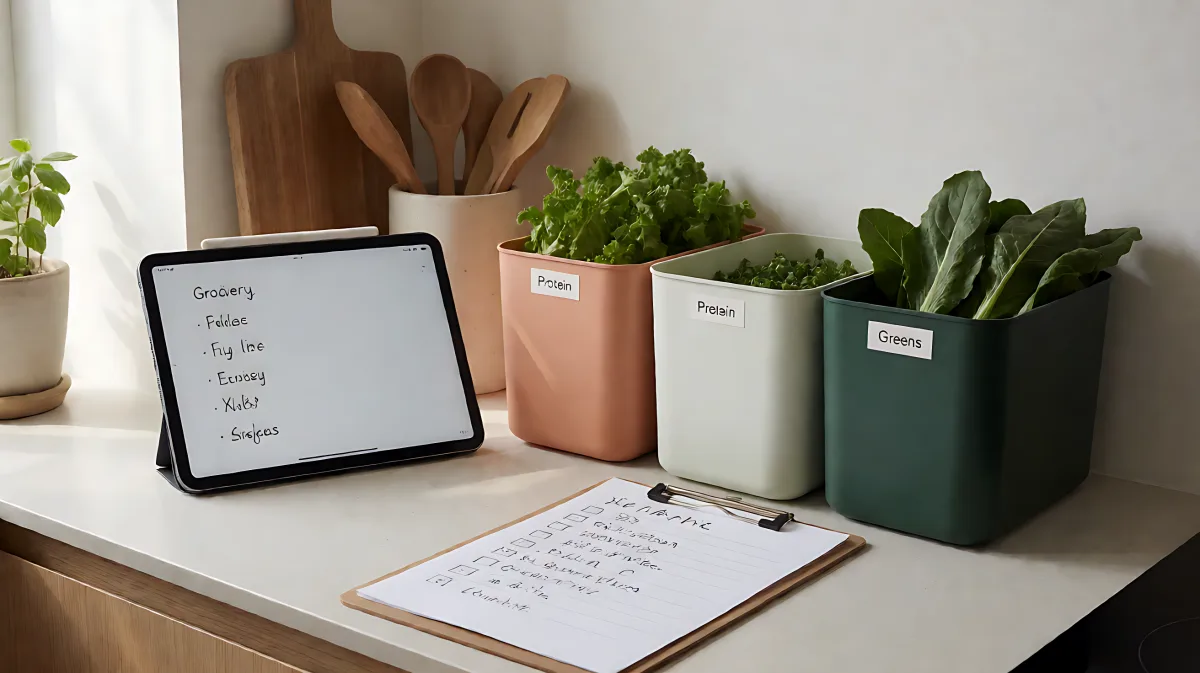
Visual cues are also critical. Warehouses use pick-to-light systems to guide workers. In the kitchen, you can use color-coded bins and magnetic tags to create visual triggers. A dedicated prep board that lists the day's 'wave' helps family members see what needs to be done next. This reduces hesitation and keeps the flow of cooking steady, much like a production line in a factory but scaled for a household.
How can simple scripts automate grocery shopping?
For those with a technical inclination, coding scripts can eliminate the tedious work of compiling grocery lists. A community-shared Google Sheets script, for instance, can automatically extract ingredient lists from recipe URLs and categorize them by type, such as proteins, produce, or pantry staples. This script then sorts the items, helping you avoid buying duplicates or forgetting essentials. By automating the data entry process, you save time on planning and ensure that your shopping trips are efficient and targeted.
You can also use apps that integrate with fitness data to generate personalized macro targets. Tools like MacroMatch use historical activity data to suggest weekly meal plans that meet specific nutritional goals. These platforms offer one-tap ordering features that aggregate your grocery list and remove duplicate items, sending the finalized list directly to delivery services. This automation layer ensures that your nutrition plan is not just a suggestion but a ready-to-execute schedule, reducing decision debt.
How do you measure and improve your meal prep system?
Continuous improvement relies on data. Enterprises measure throughput and errors; households can track three simple key performance indicators: time per meal, number of meals prepared, and amount of food waste. By logging prep times in a spreadsheet for two weeks, you can identify bottlenecks and iterate on your system. For instance, if you find that assembling dinner takes too long, you might switch to pre-portioned sauce jars or more detailed SOPs. This feedback loop ensures that your system evolves with your changing needs.
Role balance is another key metric. Create a lightweight skill matrix for your household, assigning tasks based on availability and aptitude. For example, one partner may handle cooking while the other packs lunches. Cross-training family members ensures the system continues to function even when individuals are unavailable. A case study of the Garcia family showed that implementing these systems over four weeks saved them roughly five hours a week and cut food waste by 30%, while increasing family satisfaction scores from 3.2 to 4.4 on a five-point scale.
What is a kitchen SOP and why is it useful?
A kitchen SOP is a short, six-to-ten-step checklist for a specific task, like 'Weeknight Protein Prep.' It reduces decision fatigue by providing a clear path of action, ensuring that any family member can execute the task reliably without needing to recall instructions from memory.
Can I automate meal prep without using any apps?
Yes. You can use physical systems like color-coded bins, paper checklists, and batch cooking waves. These low-tech methods apply the same logistics principles used in warehouses to achieve significant time savings without requiring digital tools or subscriptions.
How long does it take to see results from meal prep automation?
Most households see noticeable improvements in two to four weeks. The Garcia family, for example, implemented their system over four weeks and reported saving five hours weekly by the end of that period, along with a 30% reduction in food waste.
What is the best way to track food waste?
Keep a simple log in your fridge or on a notepad where you estimate the amount of food thrown away at the end of each week. Comparing this data over a two-week period helps you identify which items expire before use, allowing you to adjust portion sizes or shopping frequencies.
Do meal prep automation scripts require coding knowledge?
Basic scripts, like the Google Sheets ingredient extractor, require minimal coding knowledge and are often shared as templates. Users only need to paste the script into the app and run it. For non-technical users, apps that handle macro planning and grocery aggregation provide the same automation benefits without the need to write code.