Home Sleep Apnea Testing & Treatments | Qnest
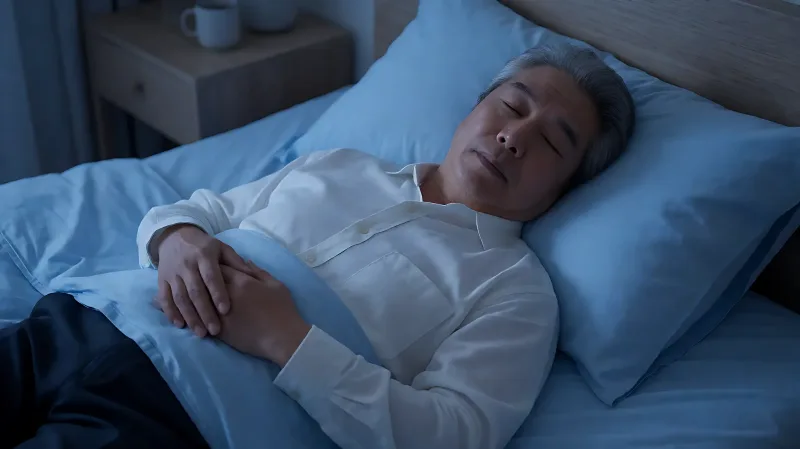
Home-based sleep studies are becoming the gold standard for diagnosing obstructive sleep apnea. This guide explains how to use portable monitors, why they are accurate, and how to manage the condition at home.
Home sleep studies are highly effective for diagnosing obstructive sleep apnea in older adults and those preferring in-home comfort. Researchers from the University of Pennsylvania found that unattended portable tests combined with clinical history accurately identify severe sleep apnea, often outperforming single-stage screenings. This approach allows patients to sleep in their own environment, improving test accuracy and reducing the burden of visiting a clinical lab.
How Do Home Sleep Apnea Tests Work?
Also known as portable sleep monitors or type III/IV sleep studies, these devices record key physiological data while you sleep in your own bed. Unlike a full in-lab polysomnography (PSG), which measures brain waves, home tests typically focus on breathing and oxygen levels. Leeds Teaching Hospitals NHS Trust, for example, utilizes the Nox T3 system, which guides users through specific setup instructions to ensure reliable data collection. The process is designed to be painless and minimally intrusive, allowing for a natural sleep state.
The primary objective is to count apneas (cessation of breathing) and hypopneas (shallow breathing) over a standard eight-hour sleep period. These devices measure three critical metrics:
- Respiratory Effort: Using chest bands to monitor thoracic and abdominal movement, confirming whether the body is trying to breathe against a blocked airway.
- Airflow: Using a nasal cannula to detect the volume of air entering and leaving the nose and mouth.
- SpO2: A pulse oximeter (usually a finger sensor) monitors blood oxygen saturation to identify desaturations that occur during breathing pauses.
What Should I Do Before the Test?
Preparing for a home sleep study requires following specific protocol to avoid technical errors that could lead to invalid results. The setup usually takes place on the night before the recording or just before you go to bed on the test night.
Device Setup and Sensor Placement
Start by checking the device's power source; most units require AA batteries or are plug-in capable. Ensure the device is placed flat on a nightstand near the bed but away from direct airflow from a fan or air conditioner. Next, apply the chest bands. One band sits around the lower ribcage, and the other sits on the upper chest, just below the neck. These must be secure but not so tight that they restrict breathing or cause discomfort. The elastic material should not bunch up or slide.
Nasal and Pulse Sensors
Attach the pulse sensor (pulse oximeter) to the index or middle finger of your non-dominant hand. This sensor is small and clips onto the fingertip. For the nasal cannula, fold the thin tube behind your ear and position the prongs gently against the bridge of your nose. The goal is to keep the prongs from falling out during sleep. If you have a dry nose, you can rinse it gently beforehand, but do not apply nasal sprays right before the test unless instructed by your doctor, as this can artificially inflate airflow readings.
Operational Check
Before turning off the lights, verify that the device is powered on. Most units display a green light or screen indicating 'Ready' or 'Recording.' Press the start button to begin the test. The device will usually run for the night; some have a timer, while others record for eight hours automatically. Do not touch the buttons in the middle of the night unless you need to signal a problem, as this may mark the segment for review.
Why Are Home Tests More Accurate Than Old Methods?
Historically, portable monitors were criticized for missing central sleep apnea, which is a failure of the brain to signal breathing. However, modern devices like the Nox T3 and systems used in the Philadelphia academic study track respiratory effort to distinguish between obstructive and central events. A study involving 452 Medicare recipients in the greater Philadelphia area demonstrated that when these home tests are used in a 'two-stage' model alongside a clinical interview, their diagnostic accuracy is exceptionally high.
The study by the Center for Sleep and Circadian Neurobiology at the University of Pennsylvania revealed that the combination of patient symptoms (such as snoring and daytime sleepiness), physical measurements (like neck circumference), and the unattended home study yielded an Area Under the Curve (AUC) of 0.85. This indicates high statistical performance in correctly identifying or excluding the condition. In contrast, using a home test in isolation without clinical context had a lower AUC of 0.774. This data supports the view that home tests are not 'screening only' but are valid diagnostic tools when properly integrated with medical history.
How Do I Interpret the Results?
After the test night, you must return the device to your provider. Do not attempt to diagnose yourself using the app or dashboard, as these are not diagnostic standards. The sleep technologist will analyze the data to calculate your Apnea-Hypopnea Index (AHI).
The AHI measures the average number of breathing pauses per hour of sleep. A normal range is fewer than 5 events per hour. Mild apnea is 5-14 events, moderate is 15-30, and severe is over 30. High oxygen desaturation levels (SpO2 dropping below 90%) and the length of the pauses are also key factors. It usually takes one to two weeks for the medical team to report these results.
What Are the Treatment Options at Home?
Once a diagnosis is confirmed, the standard of care for moderate to severe obstructive sleep apnea is CPAP therapy. The FDA has approved upper airway stimulation therapy for specific patients who do not tolerate CPAP. This involves a small device placed in the upper chest that tracks breathing patterns and sends gentle electrical impulses to keep airways open.
For milder cases, lifestyle modifications combined with oral appliances may suffice. These devices are custom-fitted by a dentist to keep the jaw forward, preventing the throat from collapsing. However, nearly 70% of sleep apnea patients have excess weight, and losing even a small percentage of body weight can significantly improve symptoms. Sleeping on your side rather than your back also reduces airway obstruction.
FAQ
Can I do a sleep apnea test at home without a prescription?
While over-the-counter consumer apps exist, they are generally not diagnostic. For a medical diagnosis that is covered by insurance and qualifies you for treatment, you need a prescription from a physician. A physician-ordered home test (Type III or IV) is the industry standard for remote monitoring and is recognized by sleep medicine boards.
How long does it take to get results from a home sleep study?
Most clinical providers aim to report results within seven to ten business days. The sleep technologist must review the entire overnight recording, and a physician must interpret the findings. If the result is borderline or if the data is corrupted, you may be required to repeat the test or undergo a full sleep lab study.
Is a home sleep test better than a lab test?
It depends on the patient. Lab tests are better for those with complex comorbidities, suspected central apnea, or neurological conditions. However, for older adults and those who suffer from "first night effect" (inability to sleep in a lab), home tests often yield more natural data. The University of Pennsylvania study confirms that home tests are highly effective for the elderly demographic.
Do home sleep tests work for people who sleep with a partner?
Yes, but you need to ensure the partner is not sharing the bed if they move a lot, or you must follow specific instructions to secure the sensors. The most common error is the nasal cannula getting dislodged by the partner's movements. Ensure the device is placed on a stable surface that will not be bumped during the night.