Home Health Insurance Reimbursement Rules Explained
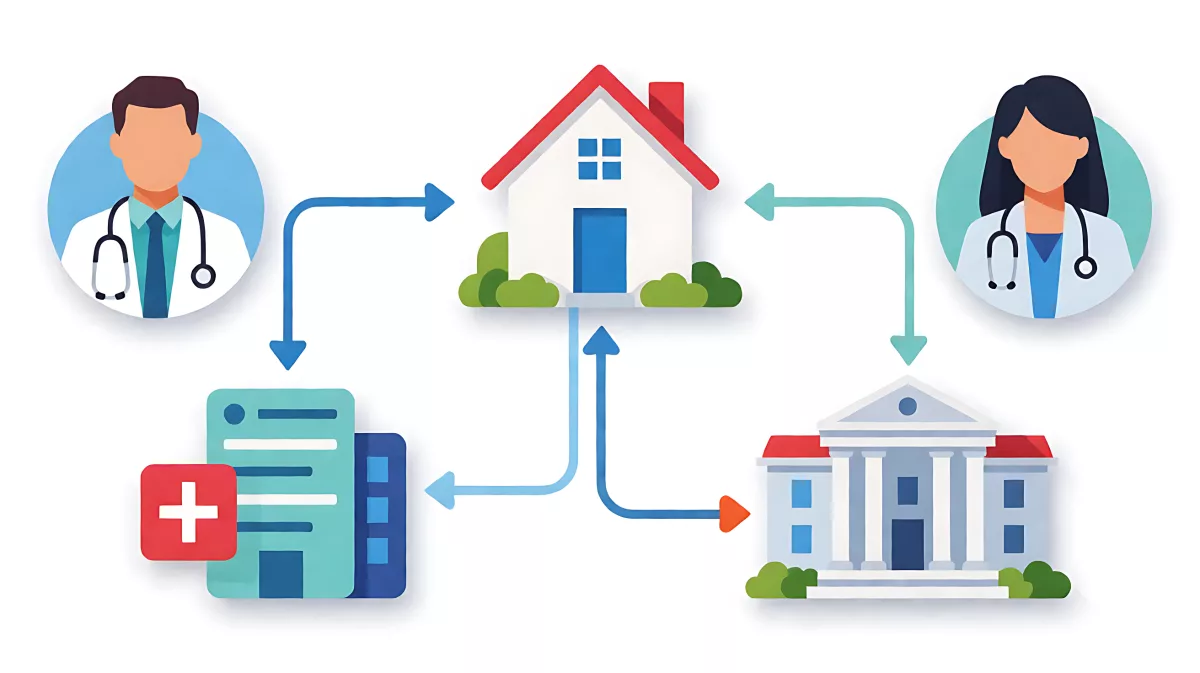
Navigating home health insurance reimbursement can be difficult. Learn how federal standards, NIH research, and interoperability impact your claims and care.
Home health insurance reimbursement rules are complex, largely because care is provided in private residences rather than clinical facilities. To understand how money moves from a patient's home to an insurance payout, you must look past simple billing forms. The process is dictated by federal regulations, specifically from the Department of Health and Human Services, and increasingly supported by National Institutes of Health-funded research that standardizes care delivery data.
How do reimbursement rules differ for in-home care?
In traditional hospital settings, billing is straightforward. In home health, the rules hinge on the distinction between skilled care and non-skilled support. Insurers under Medicare and private plans generally require a physician's order for skilled nursing or therapy. However, many commercial plans offer "home health" benefits that cover homemaker services, which are not typically reimbursed by federal programs like Medicare Part A and B. The key is understanding which services fall under your specific policy's definition of "skilled."
What is the role of the plan administrator?
The plan administrator is the gatekeeper for any reimbursement. They ensure that the billing provider meets network requirements and that the care provided aligns with the clinical protocols outlined in the policy. For employers, this often ties into internal Health Reimbursement Arrangements, where funds are allocated for out-of-pocket medical expenses. If you are using an employer-sponsored HRA to pay for home care, the rules require that the expense be a valid medical cost to remain tax-free.
Why does the National Institutes of Health matter for these rules?
While the NIH does not write insurance reimbursement policies, its research is fundamental to the standards that those policies enforce. The Institute funds studies that determine what home care is actually effective. For example, clinical trials published by the NIH demonstrate which interventions reduce hospital readmissions. When insurers design their rules for covering home care, they often reference this peer-reviewed data to define "medical necessity."
For instance, the NIH has funded extensive research on remote patient monitoring. This data supports the rule that allows insurers to reimburse for telehealth visits that replace in-person skilled nursing checks. Without this scientific backing, the reimbursement rule would not exist. The connection is vital: scientific proof of efficacy leads to regulatory acceptance, which leads to insurance coverage.
Does NIH research change what gets paid for?
Yes. As research evolves, so do the reimbursement codes. When the NIH validates a new home care technique, such as advanced wound care using specific materials, the medical community updates the procedure codes. Insurers then have to update their fee schedules to reimburse these new codes. This creates a feedback loop where government-funded science directly influences your wallet's health bill.
What role does interoperability play in claims approval?
One of the biggest hurdles in home health reimbursement is data silos. Hospitals, home agencies, and insurers often use different software. The industry is moving toward interoperability standards, such as HL7 FHIR, which allow data to flow seamlessly. The Healthcare Information and Management Systems Society has defined levels of interoperability to ensure that a care plan started in a hospital can be accessed by a home nurse.
When data is interoperable, claims are approved faster. The insurer can automatically verify the patient's eligibility and history without waiting for paperwork. This reduces the "denial risk" that is common in home health, where a missed signature can delay a payout for months.
How do I check if my data is being shared correctly?
You can request a copy of your claims history from your insurer. Look for flags related to "eligibility." If your home care agency's portal is not connected to your insurer's system, you may face out-of-network billing. Checking this connection saves money. The insurer's reimbursement rule may allow a 100 percent payout for in-network care, but only 50 percent for out-of-network. Verifying the link ensures you get the maximum benefit.
Common questions about home care reimbursements
Does health insurance cover all home health services?
No. Most plans cover "skilled" services like nursing and physical therapy. They generally do not cover non-medical support like cooking or cleaning, unless you have a specific long-term care rider. Always check your policy's "Home Health Benefit" section.
How long does a reimbursement usually take?
With interoperable systems, you might see payment in two weeks. With manual paperwork, it can take 90 days. The speed depends heavily on whether your provider submits electronic claims or faxed forms.
What happens if a claim is denied?
You have the right to an appeal. You can submit additional medical records that prove the necessity of the care. Many denials happen due to administrative errors, not medical disagreements. A timely appeal with the correct documentation often reverses the denial.