Group Memory Exercises for Older Adults and Social Connection
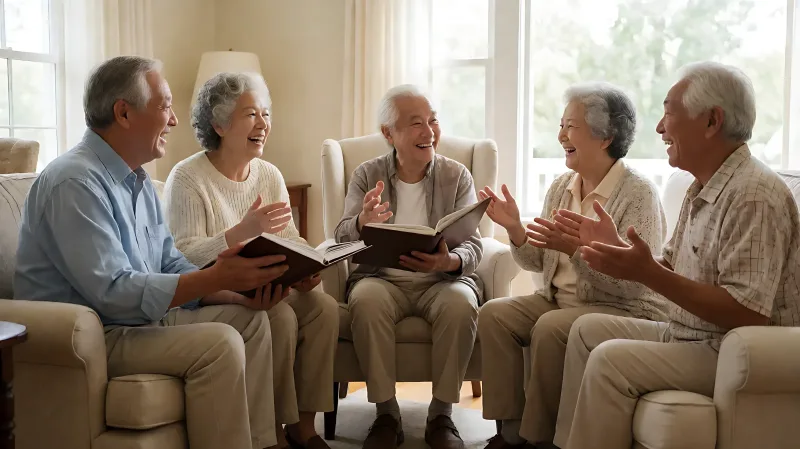
Explore the benefits of group memory exercises for seniors. From collaborative storytelling to interactive puzzles, see how social connection supports cognitive health.
Group memory exercises combine cognitive stimulation with social interaction, helping older adults maintain mental agility while strengthening community bonds. Activities like collaborative storytelling and puzzle-solving provide specific benefits such as reduced anxiety and improved mood, as noted by experts in gerontology.
For more information, see NIA healthy aging resources from the National Institute on Aging.
Why Group Activities Matter for Cognitive Health
Isolation is a significant risk factor for cognitive decline in seniors. When older adults engage in group settings, they receive dual benefits: mental challenges that keep the brain active and social support that combats loneliness. The Centers for Disease Control and Prevention (CDC) emphasizes that social connection is a key modifiable risk factor for dementia, similar to physical exercise. Group activities create a supportive environment where mistakes are celebrated rather than stigmatized, encouraging participants to push their cognitive limits without fear of judgment.
Research suggests that social engagement activates multiple brain regions simultaneously, including those responsible for memory, language, and emotional processing. This multi-tasking effect is more potent than solitary brain training apps. For example, a group trivia session requires not only recall but also listening, processing social cues, and verbal communication. This holistic approach helps maintain neural plasticity, the brain's ability to form new connections.
How Does Social Interaction Reduce Cognitive Decline?
Social interaction lowers stress hormones like cortisol, which can be harmful to the hippocampus, the brain's memory center. According to the Alzheimer's Association, consistent social engagement helps preserve personal identity and reduces the symptoms of depression and anxiety that often accompany memory loss. By interacting with peers, older adults practice perspective-taking and empathy, skills that remain sharp even in late life. This mental exercise keeps the prefrontal cortex active, supporting executive functions such as planning and decision-making.
Effective Group Memory Exercises
The best group activities are those that are inclusive, low-pressure, and fun. They should focus on the process of engagement rather than the correctness of answers. Here are three proven methods to stimulate cognition through interaction.
Collaborative Storytelling and Reminiscence
Storytelling is a powerful tool for reinforcing autobiographical memory. In a group setting, facilitators can introduce themes such as "My First Job" or "Family Traditions." Each participant adds a sentence or shares a detail, weaving a collective narrative. This exercise does more than trigger recall; it validates individual life histories and fosters empathy among group members.
Use sensory cues to enhance the experience. Playing a short clip of music from the 1950s or displaying an old photograph can spark immediate memories. The Alzheimer's Association notes that reminiscence therapy can help individuals maintain a sense of self and continuity. When others listen and respond with interest, the social reward reinforces the memory pathway, making the experience more likely to be retained.
Interactive Puzzles and Game-Based Learning
Traditional puzzles like Sudoku are effective but can be done alone. Group versions introduce a social dimension. For instance, giant jigsaw puzzles placed on tables allow multiple people to work simultaneously. Participants can divide the task by finding specific sections, such as sky or ground, requiring communication to connect their pieces. This collaboration stimulates problem-solving skills and verbal communication.
Card games and trivia contests also work well. Use large-print cards to accommodate visual needs. The goal is not just to win, but to discuss the answers. Why did that historical figure make that choice? How does this song lyric connect to that decade? These discussions extend the cognitive challenge beyond simple recall, engaging deeper reasoning and social debate.
Music and Movement Integration
Music bypasses many cognitive filters in the brain, making it an effective trigger for memory. In group exercises, participants can sing along to familiar songs, clap rhythms, or even move to the beat. Studies in frontiers in aging neuroscience suggest that musical engagement can evoke emotional memories even in later stages of cognitive decline. Group singing promotes respiratory health and social synchronization, creating a sense of unity that further supports mental well-being.
Creating an Inclusive Environment
Not all group members will have the same cognitive abilities. Successful memory exercises require flexibility. The Consumer Product Safety Commission (CPSC) advises that any physical components of games, such as small puzzle pieces, should be age-appropriate and safe to prevent choking hazards. Focus on participation rather than performance. If a participant loses their place in a story, gently guide them back without correction. The aim is to boost confidence and social connection, not to test memory limits.
Facilitators should rotate roles. One person might hold the photo, another might lead the discussion, and another might play the music. This ensures everyone feels ownership and engagement. Keep sessions to 30 to 45 minutes to prevent fatigue. Ending on a high note, with a shared laugh or a positive comment, reinforces the joy of the social interaction.
Frequently Asked Questions
How often should older adults participate in group memory exercises?
Experts recommend engaging in at least two to three structured social activities per week. Consistency is more important than intensity. Regular interaction helps maintain neural pathways and builds routine, which can reduce anxiety in seniors with early cognitive changes. A weekly schedule creates anticipation and community, both of which are vital for long-term cognitive health.
What if a participant has advanced dementia and cannot speak?
Advanced participants can still benefit from sensory-rich group activities. Use music, tactile objects, and simple movements like clapping or squeezing soft balls. The social presence of others provides comfort and stimulates the brain's emotional centers. The goal shifts from verbal recall to emotional connection and sensory engagement, which remain active even in advanced stages.
Can family members join these group exercises?
Absolutely. Including family members can enhance the social dynamic. They can share personal stories or help with logistics, such as setting up games. This intergenerational exchange provides a different type of social stimulation for older adults, combining memory with the joy of family connection. Ensure family members are briefed on focusing on engagement rather than correcting memories.
Are digital group games suitable for all seniors?
Digital tools can be effective but may not suit everyone. Large-screen interactive games in a group setting, where people point and select options together, are often more accessible than individual tablet use. Focus on shared screen experiences that require discussion and joint decision-making, rather than speed-based tasks that might cause frustration. The social aspect of discussing choices is where the cognitive benefit lies.