Grandparent Scam Prevention: Stop Account Takeover Fraud
Scammers are increasingly targeting elderly relatives using sophisticated social engineering tactics that mimic legitimate account access requests. Here is how to protect your family.
The grandparent scam is a social engineering attack where fraudsters impersonate a grandchild in crisis to trick seniors into sending money. The Federal Trade Commission reports that victims lost over one billion dollars to such schemes in recent years, with the median loss per victim exceeding five thousand dollars. To stop these attacks, families must establish a shared code word and verify all urgent requests through known contact channels before releasing any funds.
Why do scammers target older relatives?
Attackers exploit the natural protective instincts of grandparents. By posing as a grandchild who has supposedly been arrested, injured, or involved in a legal dispute, scammers create intense emotional distress. This psychological pressure overrides rational decision-making, leading victims to act quickly without verifying the story. The Federal Trade Commission notes that the median loss for these victims often exceeds five thousand dollars, reflecting the high success rate of emotionally driven fraud.
Modern scammers no longer rely solely on phone calls. They increasingly use social media and messaging apps to research targets, gathering family names, photos, and relationship details. This intelligence allows them to craft convincing narratives. In some cases, these tactics overlap with account takeover methods, where fraudsters gain unauthorized access to digital profiles to manipulate family members into bypassing security protocols.
How does a social engineering attack work?
The attack typically follows a specific timeline, often unfolding within one to three days. The fraudster initiates contact via a text message or phone call, claiming their phone number has changed. They describe an urgent emergency, such as a car accident or a hospital bill. A second person, often posing as a lawyer or police officer, may join the conversation to increase the pressure. This authority figure demands secrecy, claiming that discussing the matter with others is legally prohibited.
The goal is to isolate the victim. By demanding immediate payment via irreversible methods like wire transfers, gift cards, or cryptocurrency, scammers ensure the money is difficult to recover. The Internet Crime Complaint Center highlights that fraudsters may also use phishing emails or fake support chats to steal login credentials, blending grandparent scams with account takeover tactics to access financial records.
What are the key warning signs?
- Secrecy demands: A real emergency involving family will not forbid discussion with other relatives. Insistence on silence is a red flag.
- Irreversible payment methods: Requests for cash, Western Union, or crypto transfers rather than standard bank processes indicate fraud.
- Vague details: Scammers often avoid naming specific hospitals, police stations, or lawyers because they lack the real-world knowledge to support the story.
- Communication style changes: The tone, grammar, or emoji usage of the message may differ significantly from how the family member normally writes.
How can families prevent these attacks?
Prevention requires a combination of technical security and behavioral changes. Many families assume that strong passwords are enough, but in fact, social engineering attacks bypass technical defenses by manipulating human trust. To counter this, you must implement a layered defense strategy.
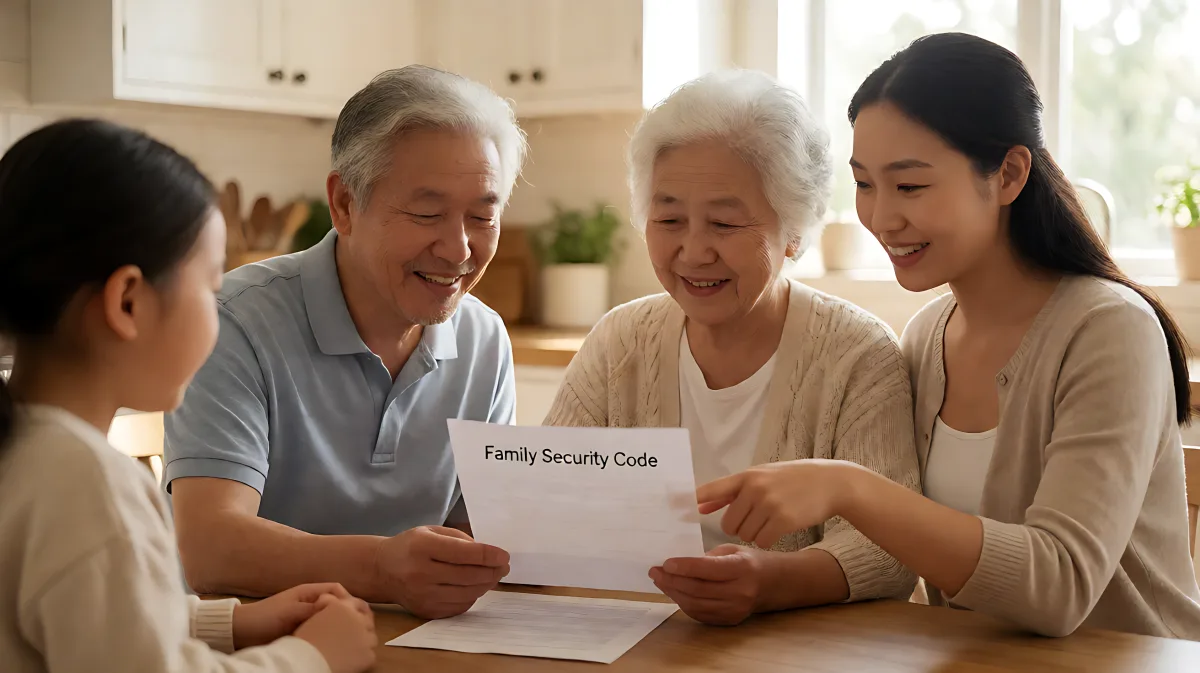
- Establish a family code word: Agree on a unique phrase known only to immediate family members. If anyone requests emergency money, ask for the code word first.
- Verify via known channels: Never use the contact information provided in an urgent message. Call the grandchild at their established number to confirm their safety.
- Set bank alerts: Enable automatic alerts for transactions over one thousand dollars. This allows you to spot unauthorized transfers immediately.
- Limit public data: Review social media settings to restrict the visibility of family names, birthdays, and pet names, which are common answers to security questions.
What should you do if you suspect a scam?
If you believe your relative has been scammed, act quickly but calmly. Do not confront the victim with anger, as they may feel ashamed and hide the incident. Instead, help them contact their bank immediately to request a recall of funds. File a report with the Federal Trade Commission and the FBI's Internet Crime Complaint Center. This data helps law enforcement track scammer patterns and issue alerts to others at risk.
How does account takeover fit into this?
Account takeover fraud involves criminals gaining unauthorized access to online banking or social media accounts. While the grandparent scam relies on voice and text, account takeover often uses phishing links that mimic legitimate websites. The Internet Crime Complaint Center advises that if you suspect an account is compromised, you should reset all credentials and revoke active sessions. For seniors, this means ensuring that multi-factor authentication is enabled on all financial and social accounts, and that no one, not even a 'bank employee' on the phone, should ever be trusted with a one-time passcode.
Can I recover money sent in a wire transfer?
Recovery is difficult but not impossible if you act fast. Contact the sending bank immediately to request a freeze on the funds and file a report with the FBI IC3. The success rate depends on how quickly you report the incident, often within the first hour.
Do scammers use AI voice cloning?
Yes, emerging threats include AI-driven voice synthesis. This makes impersonation harder to detect. To stay safe, rely on visual verification or code words rather than just hearing a familiar voice. A voice match is no longer sufficient proof of identity.
What is a good family code word?
Choose a phrase that is random and not easily guessable. Avoid common phrases like 'family' or 'love.' It should be a mix of letters, numbers, or a specific, nonsensical sentence that only your household understands.
Should I share this article with my parents?
Absolutely. Open conversations reduce shame and increase resistance. Educating older relatives about the specific tactics of the grandparent scam is one of the most effective ways to prevent financial loss and emotional harm.