How to Fall-Proof Your Home Rugs for Senior Safety
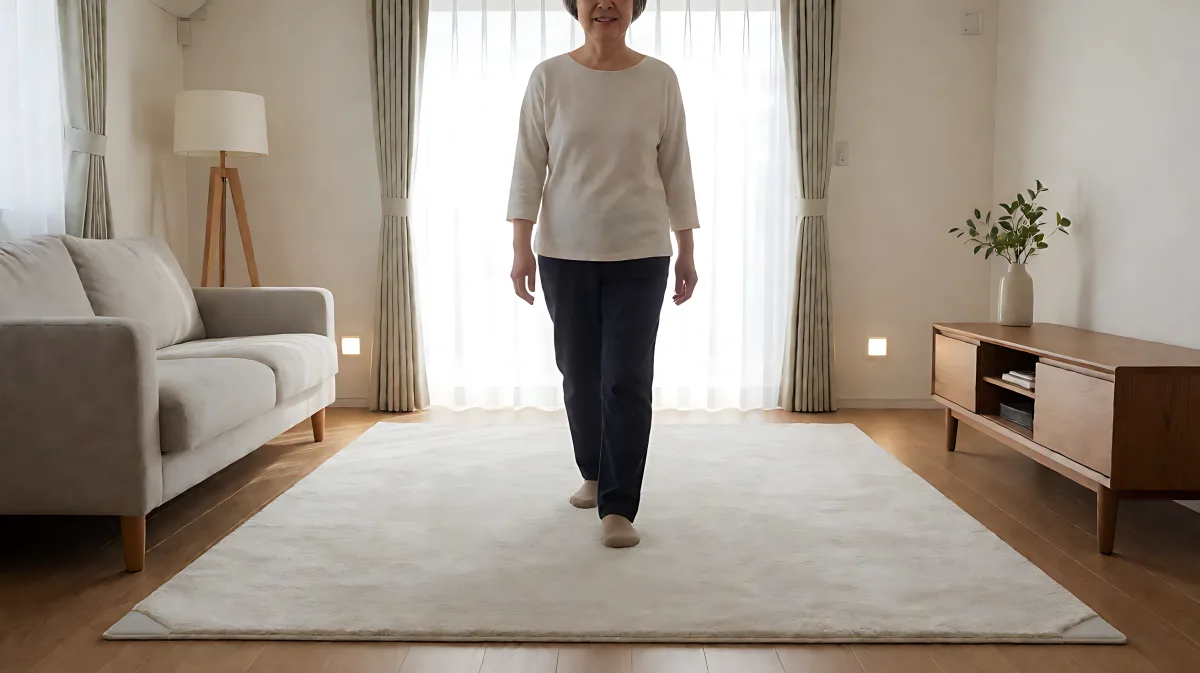
Loose rugs are a leading cause of home falls among adults aged 65 and older. This guide explains how to secure, replace, or remove rugs to create a safer living environment for seniors and families.
Loose rugs are a leading cause of fall injuries in adults aged 65 and older, with national estimates indicating that roughly 38,000 senior emergency room visits occur annually due to rugs and carpets. You can fall-proof your home by securing existing mats with non-slip pads, replacing slippery textiles with low-pile options, and removing small throw rugs from high-traffic areas entirely.
Why Are Rugs a Major Fall Risk for Seniors?
Environmental hazards account for nearly half of all home falls among older adults, with loose floor coverings being one of the most frequent culprits. Data from the Centers for Disease Control and Prevention highlights that falls are the number one cause of injury in people age 65 or older. Specifically, studies analyzing emergency department data reveal that more than 45 percent of fall injuries associated with flooring involve rugs, while over 54 percent involve carpets. The risk is not just about slipping; it is also about tripping over curled edges or transitioning between different flooring types.
What Statistics Highlight the Danger?
According to research published in the Journal of Injury and Violence Research, approximately 72.8 percent of rug and carpet-related falls happen inside the home. The bathroom is the single most common location for these injuries, accounting for roughly 35.7 percent of cases, often because rugs become damp or remain unsecured near water sources. Furthermore, women represent over 80 percent of fall injuries associated with these flooring types, making targeted safety efforts in households where senior women live critical for injury prevention.
How Can You Secure Existing Rugs Effectively?
If you enjoy the aesthetic warmth of area rugs, you do not necessarily need to remove them, but you must anchor them to the floor. The goal is to eliminate any possibility of the rug sliding or curling underfoot.
What Are the Best Non-Slip Solutions?
- Non-slip rug pads: Purchase high-quality pads with a rough, grippy underside that adheres to your hard floor. Place the pad under the rug to create a barrier that prevents movement.
- Double-sided tape or strips: For smaller runners or mats, commercial non-slip strips can be applied directly to the bottom of the rug and the floor. Ensure the tape is rated for weight and foot traffic.
- Rug grip pins: These are small plastic discs that can be tucked under the corners of loose rugs to grip the floor. They are useful for temporary securing in high-traffic walkways.
- Velcro-style hooks: Some systems use velcro on the floor and corresponding strips on the rug’s underside. This is particularly effective for bathroom mats that need to stay in place during daily routines.
When applying these solutions, check your flooring material. Certain adhesives may damage polished concrete, hardwood, or laminate floors. For sensitive surfaces, use only dry, non-adhesive grippers or thick, heavy-duty pads that rely on weight and friction rather than glue.
Which Rugs Are Safest for High-Traffic Areas?
Choosing the right material and size is just as important as securing the rug. A small, short rug in the middle of a hallway creates a trip hazard, while a large, well-secured rug can define a space safely.
What Features Should You Look For?
- Low pile height: Short-pile rugs do not curl easily and are less likely to catch on footwear. Avoid shaggy or high-pile styles in walkways.
- Non-slip backing: Many modern rugs come with a rubberized or latex backing designed to grip hard surfaces natively. If a rug has a jute or cotton backing, it will likely slide without additional pads.
- Sealed edges: Look for rugs with tightly bound edges that will not fray or curl over time. A tangle or loop at the edge of a rug is a significant trip risk for anyone with balance issues.
- Appropriate size: Use large area rugs (such as 8 x 10 feet or 244 x 305 cm) under furniture to anchor the space, rather than multiple small rugs scattered around. Small throw rugs should be eliminated from hallways and entryways.
What Are the Rules for Bathroom and Kitchen Mats?
Wet floors are a primary trigger for falls, and the bathroom is the highest-risk room in the home. Standard decorative rugs are not suitable for these areas. Instead, invest in dedicated anti-slip mats.
How Should You Manage Wet Areas?
Ensure that any mat placed in the shower or near the sink is designed to dry quickly or wick moisture away. For the kitchen, place a non-slip mat only where you stand while working (such as in front of the stove or counter), not in the walking path. Keep these mats dry and clean, as mold or grime can create a slick surface even on anti-slip materials. Regularly inspect the adhesive or gripping mechanism of these mats to ensure they remain effective.
Beyond Rugs: Holistic Home Fall-Proofing Strategies
Securing rugs is only one piece of the puzzle. Comprehensive fall prevention requires addressing lighting, footwear, and daily routines.
What Other Adjustments Reduce Risk?
Improve lighting: Poor visibility, especially at night, contributes significantly to falls. Install motion-activated LED night lights in hallways and bathrooms. Ensure that light switches are easy to reach and that bulbs are bright enough to illuminate the floor surface clearly.
Review footwear: Soft slippers or loose-fitting shoes are major contributors to trips. Wear properly fitted, low-heeled shoes with non-slip, textured soles inside the home. Avoid walking in socks on smooth hard floors.
Establish safe routines: Rushing to the bathroom is a common scenario for rug-related falls. Encourage a habit of sitting on the edge of the bed for a moment before standing to prevent dizziness. Rise slowly from chairs and take your time when moving between rooms. Regular balance exercises, such as tai chi or specific strength training, can further reduce the risk by improving coordination and muscle strength.
Consult professionals: If a senior experiences frequent dizziness or weakness, review their medications with a healthcare provider. Some drugs cause low blood pressure or drowsiness, which, combined with a slippery floor, can lead to a serious injury. Occupational therapists can also assess the home and suggest specific modifications to reduce environmental hazards.
FAQ
Should I remove all rugs from my home to prevent falls?
You do not need to remove every rug, but you must remove or secure those in high-traffic paths like hallways and entryways. If you keep a rug in a living room, it must have a non-slip pad or backing and lie completely flat with no curled edges. Small, short throw rugs that can easily shift underfoot are the most dangerous and should be prioritized for removal.
Are anti-slip tape strips safe for hardwood or laminate floors?
Standard double-sided tape can sometimes damage or leave residue on delicate surfaces like polished hardwood or laminate. For these floors, it is safer to use rubberized rug pads that rely on friction rather than adhesive, or to use rug gripper discs that do not require gluing. Always test a small, hidden area first if you decide to use a low-tack adhesive strip.
How often should I inspect my rugs for wear and tear?
You should inspect rugs monthly for frayed edges, curled corners, or detached non-slip pads. If a rug begins to curl or fray, it becomes a trip hazard regardless of its backing. Replace any rug that shows significant wear, as the structural integrity is compromised and it is more likely to move or catch on feet.
What size rug is safest for under a dining table?
There is no single "safest" size, but the rule of thumb is that the rug should be large enough to keep all four legs of the chairs on it, even when pushed back slightly. This prevents chairs from sliding off the rug edge, which can cause the rug to lift or curl. If you cannot afford a very large rug, it is often safer to forgo a dining rug and use non-slip floor protectors under the furniture legs instead.