What Is Life? Understanding Biological Processes
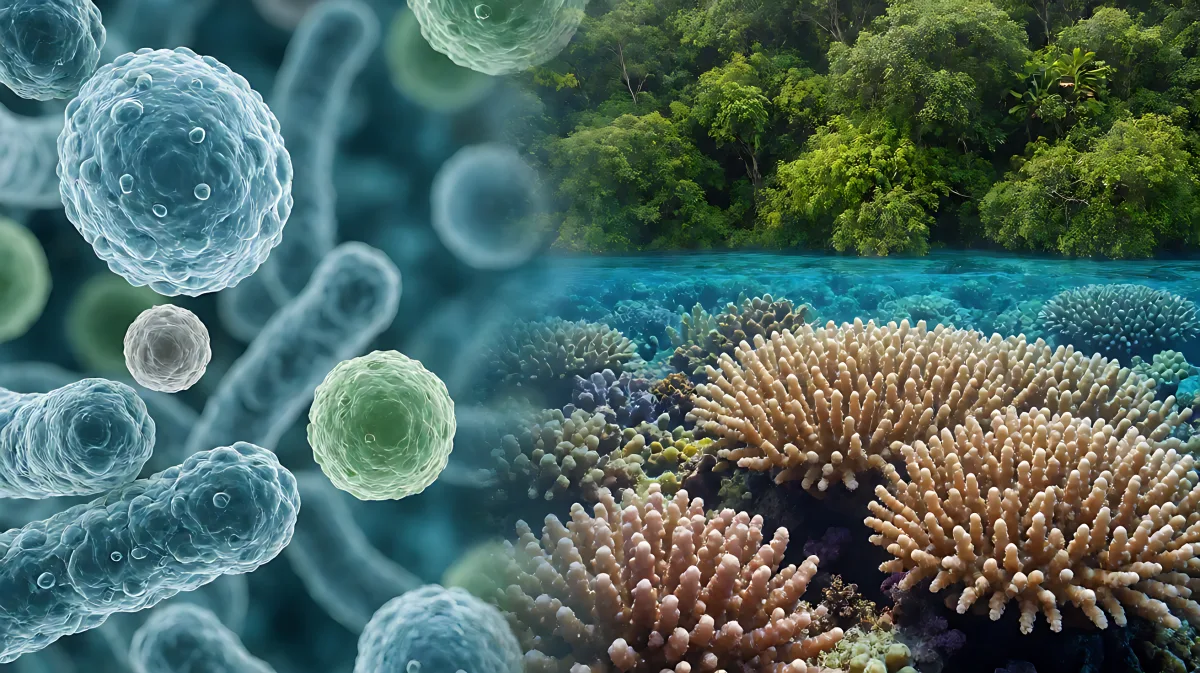
Life is the capacity of matter to perform processes like metabolism, growth, and reproduction. Explore how scientists define these living systems and the debate surrounding viruses and extraterrestrial life.
Life is defined as the capacity of matter, organized into cells, to perform processes such as metabolism, homeostasis, growth, and reproduction. These biological characteristics distinguish living organisms from non-living matter, although debates persist regarding entities like viruses and potential extraterrestrial life forms.
What are the core characteristics of living systems?
Scientists generally agree on a set of traits that define life, even though no single definition is universal. These traits describe how organisms maintain their existence and pass on their genetic material. Understanding these processes helps classify everything from microscopic bacteria to complex animals and plants.
How does homeostasis help maintain life?
Homeostasis is the regulation of an organism’s internal environment to maintain a constant state. This allows life to survive changes in external conditions, such as temperature or pH levels. For example, human bodies sweat to cool down and shiver to generate heat, keeping internal systems stable despite fluctuating weather. This self-regulating capability is a fundamental requirement for cellular life to function effectively.
What role does metabolism play in living organisms?
Metabolism refers to the chemical reactions that consume energy to build cellular components or break down organic matter. Living things require this energy to maintain internal organization and support other life processes. By converting nutrients into energy, organisms sustain their growth and respond to their surroundings. This continuous exchange of energy distinguishes active biological systems from static matter.
How do organisms grow, adapt, and respond to stimuli?
Growth and adaptation are key aspects of evolution and survival. Organisms do not merely accumulate matter; they increase in size through synthesis. Adaptation allows species to change over time in response to environmental pressures. This process, driven by natural selection, ensures that populations become better suited to their specific habitats, whether it is a deep ocean trench or a dense forest.
How do living systems respond to external stimuli?
All living organisms react to changes in their environment, known as stimuli. These responses range from simple movements in single-celled organisms to complex sensory reactions in animals. For instance, plants may turn their leaves toward the sun, a process called phototropism, to maximize energy absorption. This responsiveness is essential for avoiding danger, finding food, and reproducing successfully.
Why are viruses and extremophiles challenging to classify?
The definition of life becomes complicated when considering entities that do not fit neatly into standard biological categories. Viruses, for example, replicate only within host cells and lack their own metabolic machinery. This has led to long-standing debates about whether they are considered living or merely infectious particles. Additionally, extremophiles, organisms that thrive in harsh environments like acid mines or hydrothermal vents, expand our understanding of where life can exist on Earth.
What is the significance of extremophiles in defining life's limits?
Extremophiles demonstrate that life can survive in conditions previously thought to be hostile. These organisms, including certain archaea and bacteria, inhabit environments with extreme temperatures, pressures, or chemical concentrations. Their existence suggests that life on Earth is more diverse and resilient than previously imagined. Researchers study these microbes to understand the potential for life in other planetary environments, such as the subsurface oceans of moons like Europa or Enceladus.
How has the classification of life evolved over time?
The attempt to categorize living things dates back to ancient philosophers like Aristotle, who observed natural forms. Modern taxonomy, however, began with Carl Linnaeus, who introduced binomial nomenclature in the 1700s. Today, scientists use the three-domain system—Bacteria, Archaea, and Eukarya—to classify cellular life. This framework reflects our growing understanding of genetic relationships and the common ancestry of all terrestrial life forms.
What does the universal common ancestor imply for biological diversity?
The concept of a universal common ancestor suggests that all life on Earth shares a single origin. This unifying theory explains the fundamental similarities in cellular structure and genetic code across different species. Despite the vast diversity of forms we see today, from coral reefs to soil microorganisms, all terrestrial life traces back to this ancient lineage. This shared heritage allows scientists to use genetic tools to explore evolutionary relationships and identify new organisms.
FAQ
Can viruses be considered living organisms?
Most scientists do not classify viruses as living because they lack independent metabolism and cannot replicate without a host. They exist in a gray area, serving as a reminder that the definition of life is not absolute. However, their ability to evolve and adapt has led some researchers to propose expanding traditional definitions.
What is the difference between Bacteria and Archaea?
Both Bacteria and Archaea are single-celled microorganisms, but they differ significantly in their cell walls and genetics. Archaea are often found in extreme environments and have genetic mechanisms more similar to eukaryotes, such as animals and plants. This distinction highlights the diverse origins of cellular life on Earth.
Have we found evidence of extraterrestrial life yet?
As of 2026, there is no confirmed proof of life beyond Earth. Scientists continue to search for biosignatures in planetary atmospheres and subsurface oceans. While the detection of complex organic molecules elsewhere is promising, confirming a living organism remains a future goal for astrobiology.
How does entropy relate to living systems?
Living systems are open systems that maintain order by consuming energy. They decrease their internal entropy by taking in matter and energy from the environment and releasing degraded waste. This process allows life to exist in a universe that tends toward disorder, highlighting the dynamic nature of biological organization.