Batch Errands & Appointments: Weekly Guide for Aging Parents
Caring for an aging parent while managing your own life can feel chaotic. This guide explains how to use a weekly batching strategy to group medical visits, errands, and personal time into one manageable outing.
Batching errands and medical appointments into a single weekly outing reduces the logistical burden of caring for an aging parent. By grouping necessary tasks like pharmacy pickups, doctor visits, and household chores into one dedicated day, you create a predictable routine that protects your work hours and minimises stress. This approach ensures your parent receives consistent care while allowing you to maintain your own professional and personal responsibilities without constant interruptions throughout the week.
Why Batching Is Essential for Caregivers
Managing the care of an elderly parent often involves juggling multiple roles: employee, family member, and personal caregiver. According to Comfort Keepers, a leading in-home care provider in the United States, the lack of structure is a primary cause of caregiver burnout. When tasks are scattered across five or six days, you are constantly context-switching, which lowers efficiency and increases anxiety. By concentrating these duties into a specific 'care window,' you create predictable time blocks where your attention is fully on your parent, and clear time blocks where your attention is on work or self-care.
How Does Batching Reduce Safety Risks?
Fragmented care can lead to oversight errors. For instance, if medication refills are checked on Tuesday but an appointment is moved to Friday, a gap in coverage may occur. Research from the Alzheimer's Association emphasises that consistent routines help maintain cognitive stability for parents with memory impairment. A single, well-planned weekly trip allows you to handle all time-sensitive tasks—such as picking up specific dietary supplements or completing a physical therapy session—in one go, reducing the chance of missed doses or forgotten supplies.
Building Your Weekly Care Block
Effective batching starts with mapping. You must distinguish between fixed commitments and flexible tasks before you can cluster them efficiently.
What Are Fixed Commitments?
Fixed commitments are events that cannot move without significant disruption. For an aging parent, these typically include:
- Medical Appointments: Annual physicals, cardiology check-ups, or physical therapy sessions scheduled by specialists.
- Work Obligations: Your own shift hours, critical project deadlines, or meetings that block out large chunks of your day.
- Social or Spiritual Events: Regular worship services or support group meetings your parent values.
Record the exact location and required time for each. This data serves as the anchor for your week.
How Do You Cluster Flexible Tasks?
Once the anchors are set, you can group flexible errands. Instead of treating a pharmacy trip, a grocery run, and a post office visit as three separate trips, cluster them by geography. If your parent's cardiologist is in the north district, schedule the pharmacy pickup and the grocery store on the route to and from that appointment. Daniel Brooks, a logistics expert, notes that grouping tasks by route prevents backtracking and reduces travel fatigue for seniors. If a specific errand, like a time-sensitive bank transaction, would cause you to miss a fixed appointment, split it. Do not risk the integrity of the medical visit for the sake of convenience.
Managing the Logistics of a Senior Trip
For an older adult, a 'short' trip is often much longer than for a younger driver. You must account for the 'full appointment window,' which includes travel time, parking, check-in, and the actual service time.
How Much Time Should You Allocate?
Underestimating time is the most common error in caregiver planning. The Federal Highway Administration recommends accounting for travel time reliability, which includes parking variability. If your parent has mobility issues, add time for navigating wheelchair access or finding accessible entrances. A fifteen-minute consultation may actually occupy an hour when you include the drive, parking, and transition time. Treat this entire block as unavailable for other tasks.
What Is the 'Split Rule' for Fragile Routes?
If a cluster of errands forces you to backtrack or involves multiple complex handoffs—such as leaving your parent with a sibling while you run to a different store—the route is fragile. In these cases, split the trip. Assign the complex handoff to a specific date that has fewer variables. This prevents a small delay, like a longer-than-expected wait at the post office, from causing a cascading late arrival to a critical medical appointment.
Supporting Physical and Mental Well-Being
Batching is not just about time; it is about health. The Association for Geriatric Management highlights that social isolation and irregular routines can accelerate cognitive decline. A well-planned weekly outing can double as a social activity if you include a short walk in a park or a coffee stop, provided your parent's health status allows it.
How Do You Handle Medication Management During Batching?
Medication is the most critical variable in any care plan. Use a weekly pill organiser and schedule your pharmacy pickup to coincide with your batching day. According to the Centers for Disease Control and Prevention, adherence to complex medication regimens is significantly higher when refills are synchronised. Ask your pharmacist to sync prescriptions so all bottles are refilled on the same day of the week. This eliminates the need for multiple pharmacy trips and ensures you have a full month's supply every time you perform your weekly batch.
What If Your Parent Is Fatigued?
Monitor energy levels during the trip. If your parent struggles with the final errand, move it to a secondary, lighter day. Do not force the completion of the entire batch if it leads to exhaustion. Comfort Keepers advises that prioritising rest is often more valuable than completing minor errands like laundry. If the batch is too heavy, consider delegating one small task to a neighbour or using a delivery service for non-urgent items.
Frequently Asked Questions
Should I batch medical appointments on the same day?
Generally, yes, if the providers are located in the same area. Coordinating them minimises travel stress. However, avoid scheduling high-intensity diagnostic tests, such as an MRI, on the same day as a lengthy consultation, as this may leave your parent too fatigued for the trip home. Always confirm with your parent's primary care physician before attempting to cluster multiple specialist visits.
How do I protect my own work hours?
Define your 'protected blocks' before you schedule the care day. If you have critical meetings from 2 to 4 pm on Thursday, ensure your batching day is on a day that does not conflict with these hours. Use a shared digital calendar that shows your work and care responsibilities side-by-side so that colleagues and family members can see your availability.
What tools help with tracking this weekly plan?
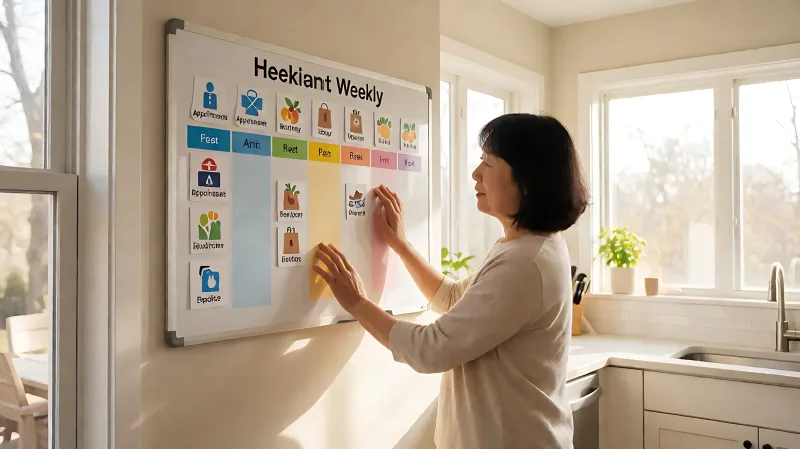
Shared digital calendars are the most effective tool. Applications that allow you to assign tasks and set reminders for medication and appointment times reduce the cognitive load on both you and your parent. Some caregivers also use simple whiteboards in the kitchen to visualise the day's plan, which helps seniors maintain a sense of orientation and reduce anxiety about the upcoming schedule.