Unlicensed Home Aides: Legal Liability & Risks Explained
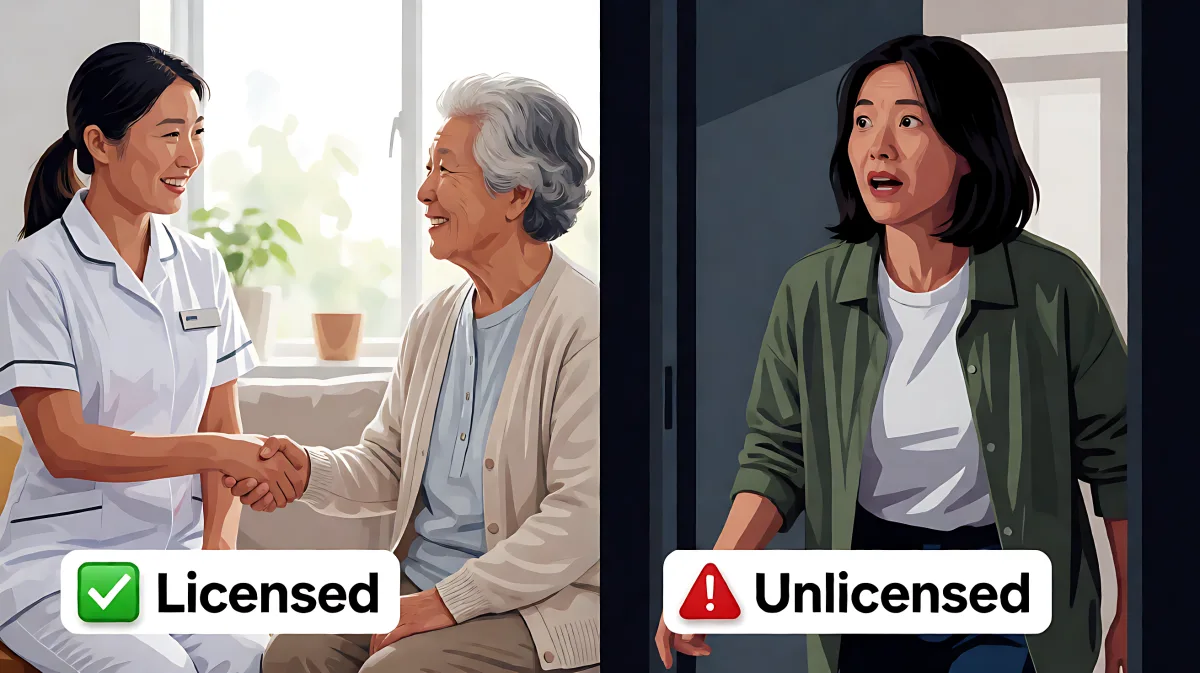
Hiring an unlicensed home aide can expose families to significant legal and financial risks. This guide explains the difference between licensed organizations and private hires, detailing liability for workplace injuries, background check gaps, and enforcement standards.
Hiring an unlicensed home aide exposes your family to direct legal liability for workers' compensation, unemployment claims, and potential tax penalties. Unlike licensed agencies, private hires are not covered by employer safeguards, meaning you assume the role of employer. To mitigate these risks, verify that all caregivers are registered on public state registries and ensure the agency holds a valid license before signing any contract.
Why Hiring Unlicensed Aides Creates Personal Legal Exposure
Many families assume that hiring a private caregiver is simply a transactional service purchase, similar to hiring a cleaner or a tutor. But in fact, when you hire an individual to provide care in your home without a licensed agency intermediary, you become the legal employer. This shift in status triggers a cascade of financial and legal obligations that do not exist when you contract with a licensed Home Care Organization (HCO).
The most immediate risk involves workplace injuries. If an unlicensed aide falls or is injured while assisting your loved one, you are personally liable for workers' compensation claims. There is no agency insurance to cover this; the cost falls entirely on your household. Furthermore, if the aide claims unemployment benefits after a termination, you may be responsible for reimbursing the state. You may also face back-payroll tax liabilities, as you were required to withhold and remit income and social security taxes on their wages. These hidden costs can erode the perceived savings of hiring privately, turning a budget-friendly option into a financial liability.
What Are the Differences Between Licensed and Unlicensed Care?
Licensed HCOs operate under strict regulatory frameworks that prioritize consumer protection. In many U.S. states, such as California, the Home Care Services Consumer Protection Act mandates that all home care organizations hold a state-issued license. Aides employed by these entities must be registered in a public database, which verifies their criminal background checks and training history.
Contrast this with unlicensed referral agencies or private hires. These individuals may not have received any formal training in health and safety protocols. They may not have undergone a comprehensive criminal background check. There is no oversight body monitoring their conduct, schedule adherence, or quality of care. If an issue arises, there is no regulatory line of communication to resolve it. You are solely responsible for vetting the individual, managing their shifts, and ensuring they are competent to perform the tasks required.
How Does the Regulatory Body Monitor Licensed Agencies?
State agencies, such as the Community Care Licensing Division, enforce strict operational standards. For instance, in California, the Home Care Services Branch oversees the licensing of organizations and maintains the registry for aides. The division has expanded its enforcement capabilities to better identify unlicensed operators who are bypassing these safety requirements. Enforcement teams conduct unannounced visits to licensed facilities to ensure compliance with training, staffing, and health protocols.
What Training and Screening Requirements Must Aides Meet?
Registered aides are not just any household help; they are subject to specific professional standards. In many jurisdictions, this includes a minimum of five hours of initial training focused on health, safety, client rights, and reporting abuse. They must also undergo annual refreshers. Additionally, all aides must be screened for active tuberculosis and cleared through a criminal background check via the state’s online guardian system. Managers and supervisors who interact with clients are also subject to these screening protocols to ensure a safe environment for vulnerable individuals.
- Initial Training: Aides must complete at least five hours of orientation training covering agency policies, safety, and client rights.
- Annual Refreshers: An additional five hours of training is required yearly to keep skills current.
- Health Screening: Proof of being free of active tuberculosis is mandatory before starting care.
- Background Check: Criminal history clearance through the state’s official fingerprinting and registry system.
How Can You Verify a Caregiver's Credentials?
Verification is the single most effective step to avoid legal exposure. Never rely on verbal assurances. Instead, use public resources to confirm the status of both the organization and the individual.
- Ask for the License Number: Demand the Home Care Organization license number. Verify this number against the state licensing database to ensure the agency is in good standing.
- Check the Registry: Ask the agency for the Personal Employment Registry (PER) ID of the specific aide assigned to your home. Search this ID in the public registry to confirm the aide is registered, active, and has no disciplinary actions.
- Confirm Employment Status: Ensure the agency states clearly that the aide is an employee of the organization, not an independent contractor. This confirms that the agency assumes employer liabilities.
Common Mistakes Families Make When Hiring Help
One pervasive misconception is that hiring a "referral" agency is legally identical to hiring a licensed HCO. In reality, referral agencies merely match you with a caregiver and charge a placement fee; they do not employ the caregiver. If the caregiver is your direct employee after the referral, you assume all employer liabilities. Another mistake is assuming that a lower hourly rate always means better value. The lack of insurance, the risk of unvetted backgrounds, and the absence of replacement staff during sick leave create hidden costs that often exceed the wage differential of a licensed service.
What Is the Cost of Non-Compliance for Agencies?
Agencies that operate without a license face severe penalties. In California, for example, licensed HCOs must pay a biennial fee of $5,603. Operating without this license is a violation of state health and safety codes. Enforcement officers can issue civil penalties, revoke licenses, or refer cases for further legal action. This rigorous enforcement creates a baseline of safety that unlicensed operators do not have to meet, putting consumers at a higher risk of harm.
What Should You Do if You Suspect Fraud or Abuse?
If you encounter signs of unlicensed operation or suspect abuse, you have a civic duty to report it. Contact the state’s complaint hotline or the specific enforcement branch overseeing home care in your region. Reporting suspected violations protects vulnerable individuals and helps regulators enforce standards. In cases of immediate danger or suspected physical abuse, contact local law enforcement or Adult Protective Services directly. Remember that regulatory agencies typically investigate complaints against licensed organizations, but they do not have statutory authority to investigate private individuals who are not employed by a licensed HCO. Therefore, the only way to protect yourself from unlicensed providers is through proactive verification before you begin care.
FAQ
Is it legal to hire a caregiver privately without an agency?
It is legal to hire a caregiver privately, but you become the employer. You are responsible for all taxes, insurance, and workers' compensation obligations. It is safer to use a licensed Home Care Organization to shift these liabilities to the provider.
Do state agencies check the backgrounds of private hires?
No. State registries and background check mandates apply to aides employed by licensed organizations. Private hires are not subject to these state-level screenings unless you voluntarily perform them yourself.
What happens if a licensed aide is injured in my home?
If the aide is employed by a licensed HCO, the agency’s workers' compensation insurance covers the claim. You are not personally liable for the injury, provided the injury occurred during the course of their employment duties.
How often are home care agencies inspected?
Licensed agencies are subject to unannounced inspections, typically occurring every two years in many states. Additionally, complaint-driven investigations can trigger immediate reviews of an agency's compliance status.