Letter of Instruction Guide: End of Life Wishes
A letter of instruction is a vital, non-legally binding document that provides your family with clear guidance on your final wishes, finances, and funeral plans. Learn what to include to reduce stress for your loved ones.
A letter of instruction is a personal, non-legally binding document that guides your family through your final wishes, financial details, and funeral preferences. It simplifies the transition after your passing by providing clear answers to common questions, reducing emotional burden and confusion for surviving relatives.
For more information, see NIA advance care planning guide from the National Institute on Aging.
What Is a Letter of Instruction?
Often confused with a last will and testament, a letter of instruction is an informal guide that supplements your legal estate plan. While a will dictates the distribution of your assets, a letter of instruction focuses on communication and logistics. It tells your loved ones where to find specific documents, who to contact, and how you wish to be remembered. According to estate planning experts, this document serves as a roadmap for the executor and family members who may be overwhelmed during a time of grief.
This type of letter is not enforceable in court. It does not override your will, trust, or other legal instruments. However, it holds significant moral and practical weight. It can include personal messages, specific funeral directives, and lists of accounts that are not appropriate for a formal legal document.
Why Is a Letter of Instruction Important for Family Caregiving?
Family caregivers often face sudden decisions without adequate preparation. The U.S. Department of Health and Human Services notes that end-of-life care decisions can be stressful for families who lack clear guidance. A letter of instruction helps prevent disputes among siblings or close friends by providing your documented preferences in advance. It ensures that your wishes are known, even if you are unable to communicate them yourself.
For example, if you prefer a small, private memorial service over a large public gathering, your letter can explicitly state this. This prevents relatives from feeling pressured to organize an event that does not align with your values. It also helps them navigate bureaucratic processes, such as notifying insurance companies or social security offices, more efficiently.
How Does It Differ From a Last Will?
A last will and testament is a legal document executed under specific formalities to distribute property. A letter of instruction is a personal document that explains the "how" and "why" behind your wishes. It can include sensitive details like passwords, specific song choices for a service, or personal letters to individual family members that would be too private for a public legal record.
What Should You Include in Your Letter?
To make your letter effective, it must be comprehensive and well-organized. Consider dividing your letter into sections for clarity. Below is a checklist of essential items to include.
- Contact Lists: A current list of phone numbers and email addresses for immediate family, close friends, clergy, and business associates who should be notified.
- Financial Details: A list of all bank accounts, investment portfolios, and insurance policies. Include account numbers, institution names, and contact information for each financial advisor.
- Legal Document Locations: State exactly where your will, trust documents, and powers of attorney are stored. If they are in a safe deposit box, provide the key location or code.
- Digital Assets: Under the Revised Uniform Fiduciary Access to Digital Assets Act (RUFADAA), you can designate a digital executor. List your major online accounts, including social media, email, and digital photo storage. Note any specific wishes regarding the deletion or preservation of these accounts.
- Funeral and Burial Preferences: Specify whether you want cremation or burial. List any preferred funeral home, religious rites, or specific traditions. Mention any music, readings, or speakers you wish to include in the service.
- Personal Messages: Write brief, heartfelt notes to each major beneficiary or loved one. These letters can express gratitude, offer forgiveness, or simply say goodbye.
Should You Include Passwords in the Letter?
Yes, but be cautious. While a letter of instruction is a great place for passwords, ensure it is stored securely. Consider using a password manager for everyday use and referencing the manager in your letter rather than listing every password manually. This keeps your physical document less prone to becoming outdated.
How Do You Write a Clear and Effective Letter?
Writing a letter of instruction does not require legal jargon. In fact, plain language is often more effective. The goal is for your family to understand your wishes without ambiguity. Start with a header that clearly states the document is a personal letter of instruction and the date it was written.
Organize the content logically. Use bold headings for each section, such as "Immediate Contacts" or "Financial Assets." Keep sentences short and direct. For example, instead of saying "It would be nice if you could consider having a small service," say "Please hold a small memorial service with only immediate family present."
Where Should You Store the Letter?
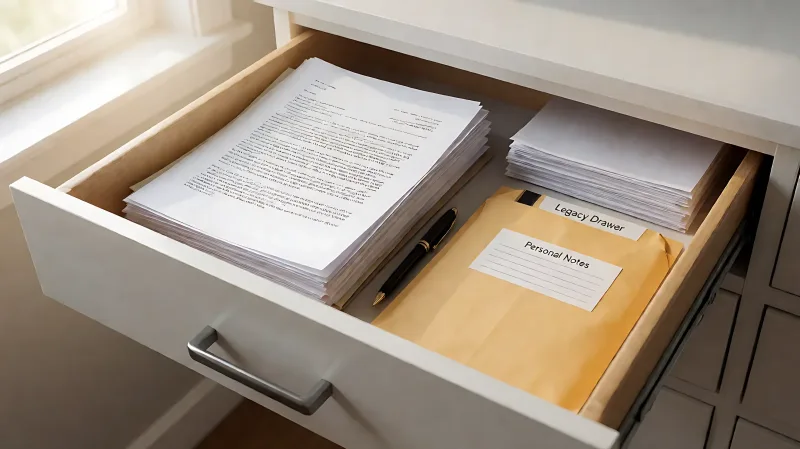
The location of your letter is critical. It must be accessible to your executor or a trusted family member immediately after your death. Avoid storing it in a safe deposit box that requires two signatures to access, as this can cause delays. A dedicated "legacy drawer" in your home, known only to your executor, is a common and safe method. Alternatively, you can leave a copy with your attorney or a trusted close friend who has a key to a safe.
Notify your primary executor or a trusted confidant of the letter's location. Do not rely on them guessing where it is. A simple note on your refrigerator or a message to your attorney can ensure they know where to look.
How Do You Handle Digital Estate Issues?
Digital assets have become a major part of estate planning. According to a survey by the American Bankers Association, nearly 75 percent of Americans have accounts with more than $50,000 in digital assets, such as cryptocurrencies or online photos. Your letter of instruction should address how these items are managed.
Specify which accounts to close, which to keep open, and who should have access. For social media, you may wish to designate a legacy contact through the platform's own settings where available. For example, Facebook and Apple allow users to designate a "legacy contact" who can manage the account after death. Mention these specific steps in your letter so your family knows exactly what to do.
What Common Mistakes Should You Avoid?
Many people make errors that complicate the process for their families. Here are the most common mistakes to avoid.
- Outdated Information: Review your letter every two years or after any major life event, such as a divorce, new child, or significant financial change. Old contact numbers and closed accounts cause frustration.
- Hidden Locations: If your family cannot find the letter, it is useless. Ensure the location is communicated to at least two trusted individuals.
- Legal Ambiguity: While the letter is not a legal document, it should not contradict your will. If there is a conflict, the will usually prevails in court. Ensure your wishes are consistent across all documents.
- Lack of Specificity: Vague wishes lead to arguments. Be specific about what you want. If you are unsure, list your top three preferences and let your family decide among them if you wish.
Frequently Asked Questions
Does a letter of instruction have to be in writing?
Yes, a written document is strongly recommended for clarity and preservation. While verbal instructions are possible, they are prone to misinterpretation or being forgotten during times of grief. A physical or secure digital document provides a permanent record.
Can I update my letter of instruction easily?
Absolutely. Because the document is not a formal legal filing with the court, you can write a new version, date it, and securely dispose of the old one. Just ensure your executor knows to use the most recent version. Consider keeping a copy of the new letter with your attorney.
How long does it take to write a comprehensive letter?
Most people spend two to four hours drafting the document. The time depends on the complexity of your financial portfolio and the number of digital assets. Use a checklist to ensure you cover all bases without spending excessive time on minor details.
Is this different from a living will?
Yes. A living will, or advance directive, is a legal document that specifies your wishes for medical care if you are incapacitated but still alive. A letter of instruction is used after death to guide family members on administrative and personal tasks. You should have both documents in place.