Rebuilding Identity After Retirement: Find Purpose & Meaning
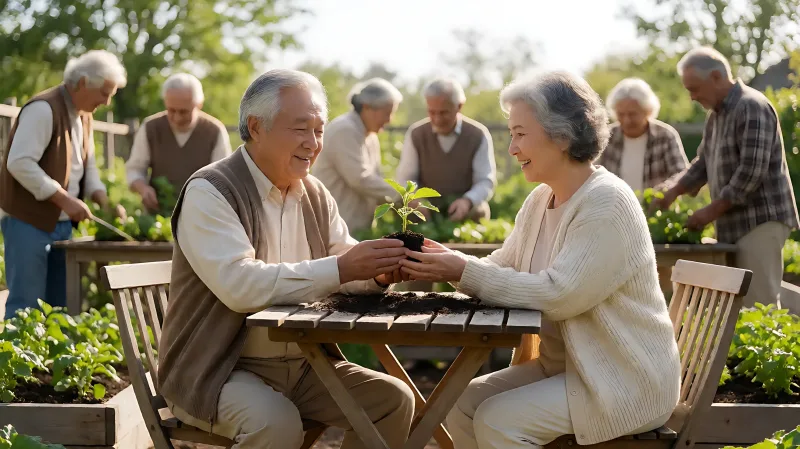
Retirement often triggers an identity crisis. Learn how to navigate this transition by building new social connections and finding meaningful roles that boost your health and well-being.
Retirement often leads to an identity crisis because your professional role defined you for decades. To rebuild your sense of purpose, you must actively replace work-based social groups with new meaningful communities. Research shows that maintaining multiple social identities after retiring significantly improves health and life satisfaction by providing opportunities to support others.
For more information, see NIA healthy aging resources from the National Institute on Aging.
Why Do Older Adults Lose Their Identity After Retiring?
For most people, the workday is not just a job; it is the framework of their life. It provides structure, social interaction, and a clear label for who they are. When that structure vanishes, many retirees feel a sudden vacuum. This phenomenon is often described as a loss of self-worth, particularly for those in high-status or authority roles such as executives, nurses, teachers, and law enforcement officers. These individuals may feel that their relevance has suddenly disappeared, leading to what psychologists call an identity transition.
The American psychological community notes that this is a normal, albeit difficult, stage of life. However, it becomes problematic when the loss of professional identity is not replaced by new sources of meaning. Without a new anchor, retirees may experience increased anxiety, depression, and social isolation. The danger lies in stagnation. If you stop building new connections and roles, the void left by your career can grow into a persistent sense of emptiness.
Who Is Most at Risk for a Post-Retirement Identity Crisis?
While everyone experiences some adjustment period, certain groups face higher risks. Those with careers defined by intense public service or high-pressure leadership roles often struggle the most. Their self-concept was tightly woven into their ability to lead, save, or manage. Once that daily practice stops, they may question their value as individuals separate from their titles.
Additionally, retirees who lack strong family support networks or who live alone are more susceptible to feeling isolated. The loss of a professional community means losing a daily tribe. If you find yourself questioning your values, interests, or even your age, you are experiencing the typical symptoms of this transition. It is not a failure; it is a signal that your life architecture needs updating.
How Does Social Identity Impact Physical Health in Retirement?
Many people view social connections as purely emotional benefits, but new research from the University of Queensland reveals a direct link between social identity and physical survival. A study published in Frontiers in Psychology examined 171 retirees and found that those who maintained multiple social group memberships after retirement reported better health and higher life satisfaction. The key mechanism was not just receiving support, but giving support to others.
When retirees join multiple groups, they find new ways to be useful. This sense of contribution boosts dopamine and reduces stress hormones. The study highlighted a stark statistic regarding premature mortality among retirees in England. Retirees who kept two strong group memberships prior to retirement had only a 2% risk of early death within six years of retiring. However, if they lost one of those groups, that risk jumped to 5%. If they lost both, the risk soared to 12%. These figures, adjusted for age and physical health, suggest that social integration is as critical to longevity as diet and exercise.
What Is the Role of "Giving" in Senior Well-Being?
The concept of "prosocial behavior" is central to post-retirement health. As you age, the ability to give emotional, financial, or practical support becomes a major source of purpose. It shifts your identity from "the person who does the work" to "the person who supports the community." This shift is profound. It moves you from a passive recipient of healthcare and benefits to an active participant in your social ecosystem. The National Council on Aging emphasizes that older adults who volunteer report lower rates of depression and higher self-esteem than those who do not.
What Steps Can You Take to Build a New Sense of Purpose?
You do not need to reinvent yourself completely, but you do need to broaden your horizons. Your goal is to build a multi-layered identity that does not rely on a single source.
- Join Three Distinct Groups: Based on the data above, aim for at least two or three active memberships. This could include a local rotary club, a faith-based group, a book club, and a volunteer organization. Variety is key because it provides different types of social support and challenges.
- Volunteer with Skills You Still Have: Do not retire from your expertise. A retired accountant can help a small nonprofit with bookkeeping. A retired teacher can mentor at-risk youth. This allows you to keep the identity of "expert" alive while serving a new mission.
- Learn a New, Unrelated Skill: Take up pottery, coding, or a foreign language. This introduces you to a completely new peer group that is not connected to your previous career, preventing you from getting stuck in old professional circles.
- Create a Weekly "Anchoring" Routine: Mimic the structure of work without the pressure. Dedicate specific hours to a project, a class, or a volunteer shift. This provides the daily rhythm that many retirees miss most.
How Do You Grieve the Loss of Your Work Identity?
Grief is a valid part of retirement. You are losing a daily routine and a primary social circle. Acknowledge this loss rather than pretending you are "free all the time." Allow yourself a period of mourning, perhaps six months, before aggressively pushing for new connections. If you feel overwhelmed, consider speaking with a therapist who specializes in aging. Cognitive Behavioral Therapy (CBT) can help reframe negative thoughts about being "useless" or "past your prime."
What Role Do Family and Community Play in Retirement Identity?
Your family is often your first line of identity, but relying solely on family can be exhausting. Children may have their own busy lives, and grandchildren may only see you on weekends. This is why peer-based community groups are essential. They provide a level of connection that family cannot always sustain.
Community organizations, such as the AARP, offer programs specifically designed to combat social isolation. They provide forums for older adults to share experiences and form new friendships. Participating in these groups helps normalize the struggle of identity loss. When you hear others saying, "I don't know who I am anymore," it reduces the shame associated with the transition and fosters collective resilience.
Can Technology Help Rebuild Social Connections?
Yes, technology can bridge the gap for older adults who may be housebound or live far from family. Online groups related to specific hobbies, such as woodworking, gardening, or history, can provide daily interaction. However, it is best to use technology as a tool to enhance in-person connections rather than a replacement for them. The goal is to stay active, not just to scroll.
Frequently Asked Questions
How long does it take to adjust to a new identity after retirement?
Adjustment is not a single event but a process. Most people experience the sharpest dip in mood within the first three to six months after leaving the workforce. By year two, most retirees who have successfully integrated new social roles report higher life satisfaction than they did while working. Patience is key.
Is it normal to feel depressed after retiring?
Yes, a temporary dip in mood is normal. This is often referred to as "post-retirement blues." However, if feelings of hopelessness, loss of interest in activities, or sleep disturbances persist for more than two weeks, it may be a sign of major depressive disorder. In these cases, consult a primary care physician or mental health professional for an evaluation.
What are the best ways to keep busy without working?
The best activities are those that combine social interaction with mild challenge. These include group exercise classes, community garden projects, or part-time mentoring. The key is to choose activities that involve other people, as this supports the "multiple social identity" model which is linked to better health outcomes.
Can I still identify with my profession after retiring?
Absolutely. You can maintain your professional pride without making it your sole identity. For example, a retired surgeon can still take pride in their medical knowledge while identifying equally as a grandfather, a chess player, and a volunteer. The goal is to diversify your self-concept so that one role is not your entire world.
How does financial security affect my sense of purpose?
Financial security removes the stress of survival, allowing you to focus on meaning. However, studies suggest that beyond a certain threshold, money does not increase happiness or purpose. In fact, having no financial worries can make it harder to find motivation unless you deliberately choose meaningful pursuits. Ensure your savings are stable, then invest your energy in relationships and contributions.