How Step-Up Basis Affects Capital Gains on Inherited Homes
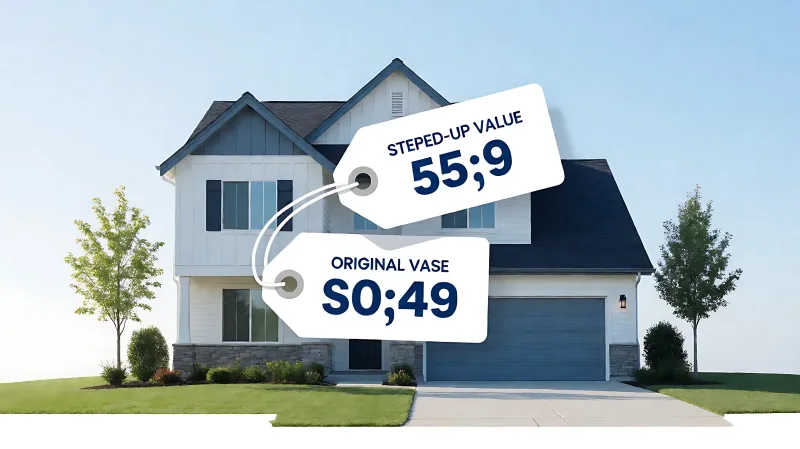
When you sell an inherited home, your tax bill depends on the step-up in basis rule. Understand how fair market value at the date of death protects heirs from high taxes.
When selling an inherited house, heirs typically pay capital gains tax only on the appreciation that occurred after the original owner died. This protection, known as the step-up in basis, resets the home's value to its fair market price on the date of death, significantly reducing your tax liability compared to using the original purchase price.
For more information, see NIA health information for older adults from the National Institute on Aging.
What Is the Step-Up in Basis Rule?
The step-up in basis is a provision under Section 1014 of the Internal Revenue Code in the United States. It dictates that when an individual passes away, their assets receive a new cost basis equal to the fair market value (FMV) at the date of death. If the asset has appreciated in value since it was bought, the basis increases. This means the unrealized gains during the deceased owner's lifetime are wiped out for tax purposes. Heirs only owe tax on the increase in value that happens after they inherit the property.
This rule applies to various assets, including real estate, stocks, bonds, and business interests. However, it does not apply to retirement accounts like 401(k)s, IRAs, or pensions, which retain the original owner's basis. For residential real estate, this rule is particularly beneficial because homes often gain value over decades. Without the step-up, heirs would face a massive tax bill on decades of accumulated appreciation.
How Does This Affect Your Capital Gains Tax?
Capital gains are the profit from the sale of an asset. The tax rate you pay depends on how long you held the asset. The Internal Revenue Service grants inheritors a long-term holding period immediately. This means even if you sell the inherited house the day after the owner dies, the gain is taxed at long-term capital gains rates rather than short-term rates, which are often higher and equal to ordinary income tax rates.
| Rate Type | Typical Federal Range | Application |
|---|---|---|
| Short-Term | Ordinary Income Tax Rates | Assets held one year or less |
| Long-Term | 0%, 15%, or 20% | Inherited assets, regardless of original owner's hold time |
In 2025, the long-term capital gains tax rates for most individuals are 0%, 15%, or 20%, depending on their taxable income. Additionally, the Net Investment Income Tax, also known as the 3.8% NIIT, may apply to higher-income earners. For UK readers, inheritance tax is a separate concept from capital gains tax on assets, but UK rules on probate value and capital gains exemptions for primary residences often serve a similar protective function for heirs.
How to Calculate Your New Basis
To determine your tax liability, you must establish the basis of the inherited property. The basis is generally the fair market value on the date of the decedent's death. You can find this value by contacting the estate's executor, who may have obtained a professional appraisal. If the estate file an estate tax return, the executor may elect to use an alternate valuation date, typically six months after death, but only if the property value has decreased.
Consider a practical example. Suppose a parent purchased a home for $50,000 in 1975. By the time of their death, the home is valued at $500,000. If they had sold it before dying, they would have faced a gain of $450,000. However, because they passed it to their heir, the heir's basis is stepped up to $500,000. If the heir sells the home two years later for $525,000, their taxable gain is only $25,000. Without the step-up rule, the heir would have been taxed on a $475,000 gain.
Can Heirs Exclude Gain on a Primary Residence?
If you, the heir, move into the inherited home and use it as your primary residence for at least two years before selling it, you may qualify for the Section 121 exclusion. This federal provision allows eligible taxpayers to exclude up to $250,000 (or $500,000 for married couples filing jointly) of capital gains from their taxable income. This exclusion applies to the gain calculated after the step-up in basis. Therefore, if your gain from selling the inherited home is less than the exclusion amount, you may owe no federal capital gains tax on that profit.
What Should Heirs Consider Before Selling?
Heirs must weigh the financial benefits of selling against personal attachment to the property. Selling too quickly might not align with long-term investment goals, but holding onto the asset can defer taxes. However, taxes are due upon the sale event. Heirs should also be aware of other costs, such as state and local property taxes, transaction fees, and potential estate administration costs. If multiple heirs co-own the property, they must agree on the sale timeline and distribution of proceeds.
How Do Community Property States Differ?
In community property states, such as Texas and California, married couples receive a double step-up in basis. When one spouse dies, the surviving spouse's interest in community property is also stepped up to the date-of-death fair market value. This means both halves of the community property asset receive a new basis. In non-community property states, only the decedent's share is stepped up, while the surviving spouse retains their original cost basis for their share. This distinction can significantly reduce capital gains taxes for surviving spouses in community property states.
Frequently Asked Questions
Does the step-up in basis apply to rental properties?
Yes, the step-up in basis applies to rental properties and other real estate inherited from a decedent. The basis is reset to the fair market value at the date of death. Any depreciation claimed by the previous owner does not reduce the new basis for the heir, but the heir can claim new depreciation on the stepped-up value for their rental income reporting.
What if I inherited a house and it is worth less than the original owner paid?
If the fair market value at the date of death is lower than the original purchase price, the basis is stepped down to that lower value. This is known as a step-down in basis. In this scenario, you may have a capital loss when you sell, which you can deduct subject to certain IRS limits on capital losses.
Are inherited assets inside trusts treated differently?
Assets held in certain irrevocable trusts may not qualify for the step-up in basis if the trust was created before the decedent's death and specific conditions are met. It is crucial to consult with a tax attorney to review the terms of any trust involved in the inheritance to determine if the step-up provision applies.
How does the UK handle capital gains on inherited homes?
In the United Kingdom, the Inheritance Tax system is separate from Capital Gains Tax. When someone dies, their estate may need to pay Inheritance Tax. For Capital Gains Tax, the value of the property at the date of death is used as the reference point for calculating gains if the property is later sold. This is similar in concept to the US step-up, though specific thresholds and tax rates differ between the two countries.
Can I use the alternate valuation date for my basis?
You cannot unilaterally choose the alternate valuation date. This election is made by the executor of the estate when filing the federal estate tax return, and it can only be used if the value of the assets declines between the date of death and the alternate date. The executor's choice binds the beneficiaries to the basis determined for estate tax purposes.